CNC Milling Service,
3-Axis, 5-Axis & High-Speed Milling
From simple prismatic brackets to complex aerospace geometry, our 200+ CNC machines deliver precision milled parts with tolerances down to ±0.001 mm, on time, every time.
What Is CNC Milling?
CNC milling is a subtractive machining process where computer-controlled rotary cutting tools remove material from a solid workpiece. Unlike turning, which spins the part, milling spins the tool and moves it across a stationary or indexed workpiece along multiple linear and rotational axes.
3-axis milling moves the cutter in X, Y and Z, sufficient for the majority of prismatic features: flat surfaces, pockets, slots and drilled holes. It is the most cost-effective approach for parts where all features are accessible from one face or a small number of setups.
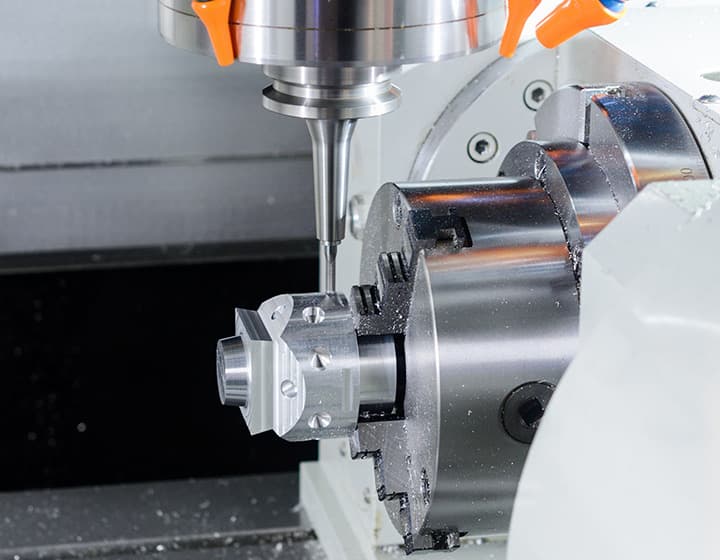
5-axis simultaneous milling adds two rotational axes (A and B, or A and C), letting the spindle approach the workpiece from virtually any angle in a single clamping. This eliminates repositioning errors and is essential for compound-curve aerospace surfaces, medical bone plates, and turbomachinery components. Learn more on our dedicated 5-axis page.
Choose 3-axis for flat or simply stepped geometry. Choose 4- or 5-axis when your part has compound angles, undercuts, or when you need to minimize setups to hit tight positional tolerances across multiple faces.
CNC Milling Types
We operate 3-axis, 4-axis and 5-axis CNC milling centres. The right choice depends on part geometry, batch size and required tolerance.
3-Axis Milling
The workhorse of CNC milling. Three linear axes (X, Y, Z) handle the vast majority of prismatic parts, housings, brackets, plates, and blocks with flat or gently contoured surfaces.
- Standard tolerance ±0.01mm
- Flat & contoured surfaces
- Pockets, slots & through-holes
- Max part 600 × 400 × 300 mm
Ideal for: brackets, enclosures, plates, jigs and fixtures
4-Axis Milling
A rotary A-axis added to 3-axis movement. Parts can be indexed or continuously rotated during cutting, eliminating secondary setups for features around a cylindrical or complex profile.
- Rotational features in one setup
- Complex profiles & cams
- Reduced fixturing cost
- Excellent for shaft-style parts
Ideal for: cams, impeller blanks, manifolds with radial features
5-Axis Milling
Simultaneous 5-axis movement lets the cutter approach from any direction. Complex compound curves, undercuts, and tight cavities are cut in a single setup, reducing errors and cycle time.
- Achievable tolerance ±0.001mm
- Aerospace & medical geometry
- Single-setup complex parts
- Undercuts & compound curves
Ideal for: turbine blades, medical implants, aerospace structural parts
Learn moreSpecification Comparison
Quick-reference specifications for our 3-axis and 5-axis milling services.
| Specification | 3-Axis | 5-Axis |
|---|---|---|
| Standard Tolerance | ±0.01 mm | ±0.005 mm |
| High Precision | ±0.005 mm | ±0.001 mm |
| Max Part Size | 600 × 400 × 300 mm | 500 × 400 × 250 mm |
| Min Feature Size | 0.5 mm | 0.3 mm |
| Min Wall Thickness | 0.5 mm | 0.4 mm |
| Max Depth-to-Width | 4:1 | 6:1 |
| Surface Finish Ra | 0.8 μm std | 0.4 μm std |
Tolerances achievable depend on material, part geometry and feature size. Contact us for a DFM review on critical dimensions.
Materials We Machine
We stock and machine 50+ metals and engineering plastics. Common CNC milling materials:
Surface Finishes
All surface finishes available in-house. Lead time and cost depend on the process, discuss requirements when submitting your RFQ.
As-Machined
Ra 1.6-3.2 μm direct off the machine. Clean, functional surfaces with visible tool marks.
Anodizing (Type II & III)
Electrochemical oxide layer on aluminum. Type II decorative; Type III hard for wear resistance.
Hard Anodizing
Type III anodizing to 25-125 μm. Excellent hardness (60-70 HRC equivalent) and dielectric properties.
Bead Blasting
Uniform matte texture, Ra 0.8-2.0 μm. Removes machining marks and improves aesthetics.
Powder Coating
Durable polymer finish in any RAL/Pantone color. Impact and corrosion resistant.
Electropolishing
Electrochemical surface smoothing. Reduces Ra by 50%, ideal for stainless steel medical parts.
Nickel Plating
Electroless or electrolytic nickel. Corrosion resistance, solderability, or as undercoat for chrome.
Laser Engraving
Permanent part marking, serial numbers, logos, QR codes. No mask or ink required.
CNC Milling Design Guidelines
Following these guidelines helps you get accurate quotes, avoid costly redesigns and ensures your parts are manufacturable at the tolerances you need.
- Minimum wall thickness 0.5 mm for metals, 1.0 mm for plastics, thinner walls vibrate during cutting and can deflect.
- Inside corner radius ≥ 1/3 of cavity depth, end mill diameter must fit the corner radius; design accordingly.
- Avoid deep narrow slots (depth > 6× width), tool deflection and chip evacuation become critical beyond this ratio.
- Specify surface finish Ra only where functionally required, unnecessary finishing callouts add cost and lead time.
- Add draft to vertical walls only if needed for function, draft is for molding, not machining; omit unless necessary.
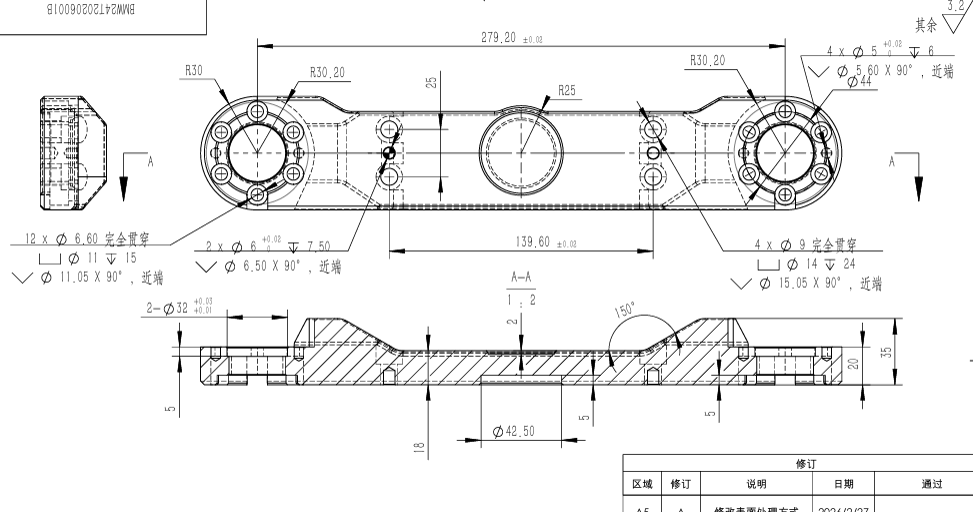
- Provide a 2D drawing for GD&T callouts and tight tolerances, model alone cannot convey datum references or geometric tolerances.
Need a DFM Review?
Upload your CAD files with your quote request. Our engineers provide a free Design for Manufacturability analysis identifying issues before cutting starts, at no charge.
Request Free DFM ReviewIndustries Served
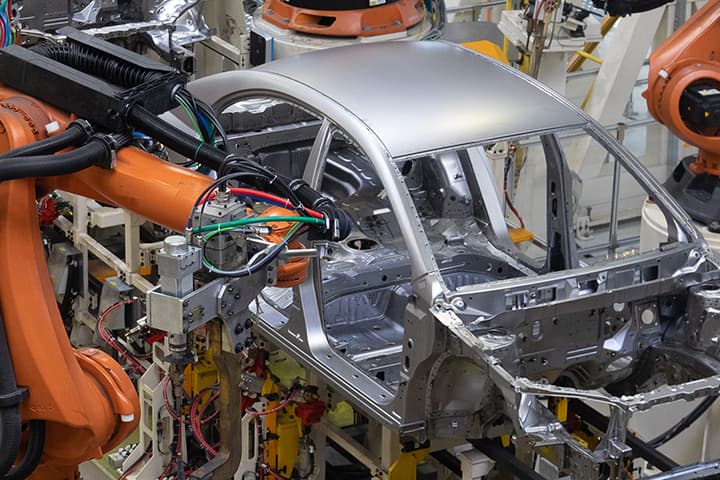
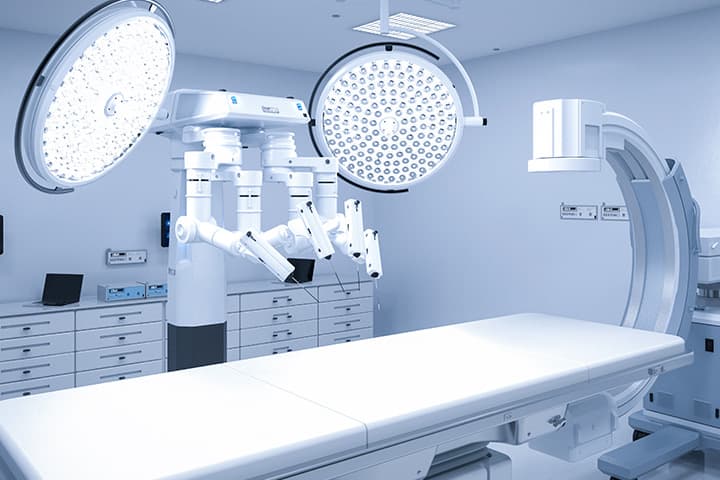
Our CNC milling capabilities serve demanding applications across six industries.

Related Services
Frequently Asked Questions
What is the difference between 3-axis, 4-axis and 5-axis CNC milling?+
3-axis milling moves the tool in X, Y and Z and suits flat and prismatic parts. 4-axis adds a rotary axis to machine around a part without re-fixturing. 5-axis adds a second rotary axis so the tool reaches almost any face in one setup, ideal for complex contours. We run all three and pick the most cost-effective for your part.
What tolerances can your CNC milling hold?+
Our CNC milling holds standard tolerances of ±0.005 mm and tighter tolerances down to ±0.001 mm on critical features, with surface finishes to Ra 0.4 μm. Critical dimensions are verified by CMM and supplied with an inspection report on request.
Which materials can you CNC mill?+
We mill aluminum (6061, 7075), stainless steel (303, 304, 316L), titanium, brass, copper, mild and tool steels, plus engineering plastics such as PEEK, POM and nylon. Material certificates and traceability are available for aerospace and medical parts.
Is there a minimum order quantity for CNC milled parts?+
No. There is no minimum order quantity. We mill single prototypes through to production runs, with the same tolerances and quality process on every part.
How fast can I get a CNC milling quote?+
Upload your 3D STEP file and 2D drawing and you will receive a detailed quote, with a free Design-for-Manufacturability review, within 1 to 12 hours. Lead time for most milled parts is 3 to 10 working days.
Do you offer 5-axis CNC milling for complex parts?+
Yes. Alongside 3-axis and 4-axis milling we run full 5-axis machining for complex contours, undercuts and aerospace or medical parts, all under ISO 9001 + 14001 certified quality.
Ready to Machine Your Parts?
Upload your CAD files and get a detailed CNC milling quote within 24 hours. No minimum order quantity, prototypes to production runs.
Need turning too? If your part has both milled features (pockets, flats, cross-holes) AND a turned diameter or threaded shaft, run it through our combined milling-and-turning shop instead, one quote, one setup, tighter inter-feature tolerance.
See CNC Milling + Turning Services