CNC Machining Tolerances,
Standards, Fits & Geometric Dimensioning
A practical guide to tolerances, surface finishes and GD&T for CNC machined parts. Understanding these standards helps you design parts that are manufacturable, measurable and cost-effective.
Understanding CNC Machining Tolerances
Updated July 2026 · Reviewed by Ginwate engineering
A tolerance is the permissible range of dimensional variation for a manufactured feature. If a shaft is designed at 25.000 mm with a tolerance of ±0.01 mm, any shaft measuring between 24.990 mm and 25.010 mm is acceptable. Tolerances exist because perfect accuracy is physically impossible, and unnecessary: most parts function perfectly within a defined range.
Tighter tolerances cost more, not because precision is inherently expensive, but because it requires slower feed rates, additional finishing passes, higher-grade tooling, and more time on CMM inspection. A ±0.005 mm hole might require a finish boring operation and 100% CMM inspection where a ±0.05 mm hole is inspected by sampling. Specify only what function demands.
The table below covers Ginwate's standard, tight and precision tolerance capabilities across our main processes. Where no tolerance is called out on a drawing, we default to ISO 2768-m (medium) for linear dimensions and ISO 2768-K for geometric tolerances.
Tolerance Capability by Feature
Standard, tight, and precision tolerance ranges across all major feature types. Values for aluminum unless otherwise noted.
| Feature | Standard | Tight | Precision |
|---|---|---|---|
| General Linear Dimensions | ±0.1 mm | ±0.01 mm | ±0.005 mm |
| Hole Diameter (milled) | ±0.05 mm | ±0.01 mm | ±0.005 mm |
| Shaft / Pin Diameter (turned) | ±0.05 mm | ±0.005 mm | ±0.003 mm |
| Bore Diameter (turned) | ±0.05 mm | ±0.005 mm | ±0.003 mm |
| Swiss CNC Diameter | ±0.01 mm | ±0.005 mm | ±0.003 mm |
| 5-Axis Compound Features | ±0.02 mm | ±0.005 mm | ±0.001 mm |
| Flatness | 0.1 mm / 100mm | 0.02 mm / 100mm | 0.005 mm / 100mm |
| Parallelism | 0.1 mm | 0.02 mm | 0.005 mm |
| Perpendicularity | 0.1 mm | 0.02 mm | 0.01 mm |
| Concentricity / Runout | 0.05 mm TIR | 0.01 mm TIR | 0.005 mm TIR |
| True Position (milled hole) | ±0.1 mm dia. | ±0.02 mm dia. | ±0.01 mm dia. |
| Thread Pitch Diameter | 6H / 6g class | 5H / 5g class | 4H / 4g class |
| Surface Finish Ra | 1.6-3.2 μm | 0.8 μm | 0.4 μm |
| Surface Finish Rz | 12.5 μm | 6.3 μm | 1.6 μm |
| Angular Tolerance | ±0.5° | ±0.1° | ±0.05° |
Precision tolerances require DFM review, additional inspection and may increase lead time. Availability depends on material, part geometry and feature size. Contact us to confirm.
ISO Tolerance Grades
ISO 2768 defines general tolerances for linear dimensions. Higher precision grades cost more and increase lead time, specify only where functionally required.
Surface Finish (Ra Values)
Ra (roughness average) is the most common surface finish specification. Our machines achieve Ra values down to 0.4 μm standard, and Ra 0.2 μm with fine grinding.
Geometric Dimensioning & Tolerancing (GD&T)
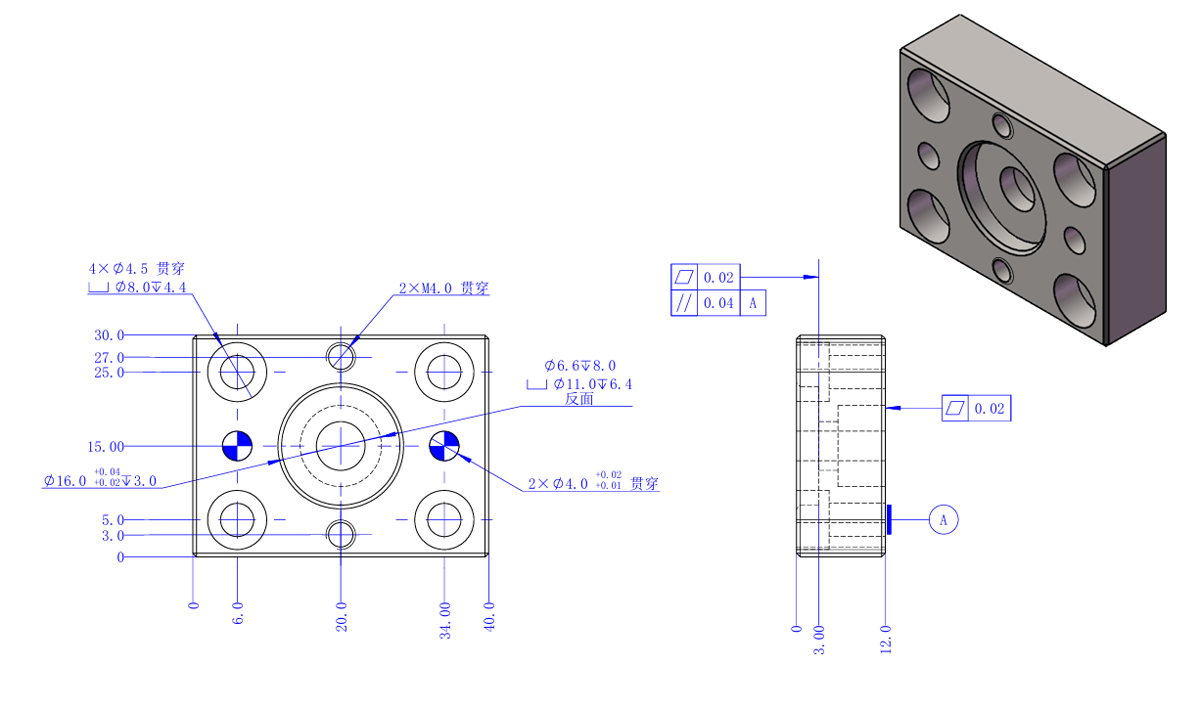
GD&T provides a language for communicating design intent beyond just linear dimensions. When working with Ginwate, include GD&T callouts in your 2D drawings for critical features.
Referenced to a machined datum face. Use 5-axis for compound angle perpendicularity.
Requires precision datum registration. Achievable on grinding to 0.002 mm.
Affected by fixturing spring and material stress relief. Grinding recommended for tight flatness.
Measured in CMM. Achievable through cylindrical grinding after turning.
Combined roundness + straightness. Grinding post-turning for <0.005 mm.
Use coordinate boring or jig boring for ≤0.02 mm. 5-axis reduces repositioning error.
Measured during turning or on CMM. Grinding after turning for <0.005 mm TIR.
Full surface runout. Requires accurate live-centre between-centres turning.
5-axis machining and tilted-head boring for tight angular features.
Complex surface profiles verified on CMM. 5-axis recommended for bilateral tolerance.
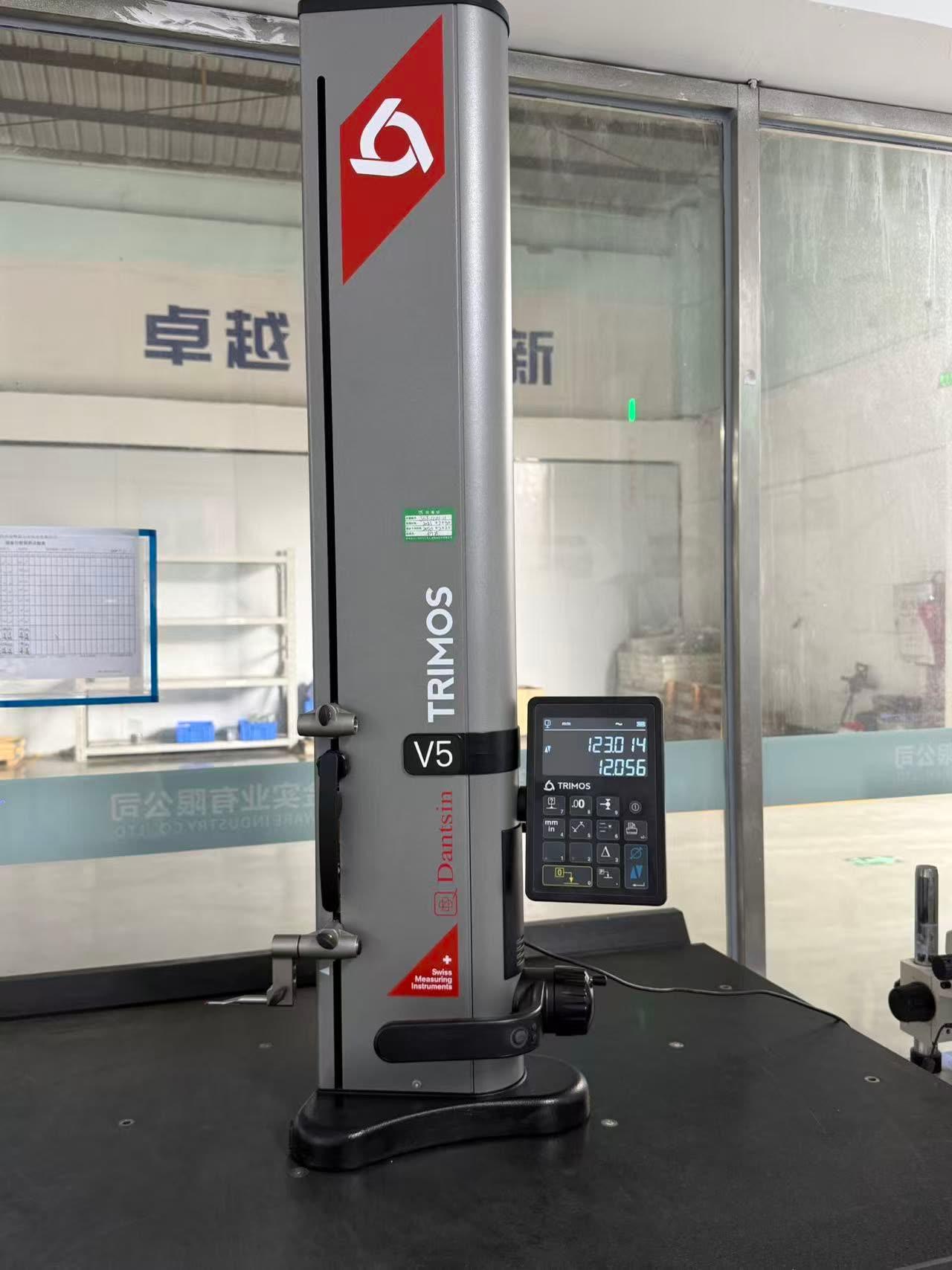
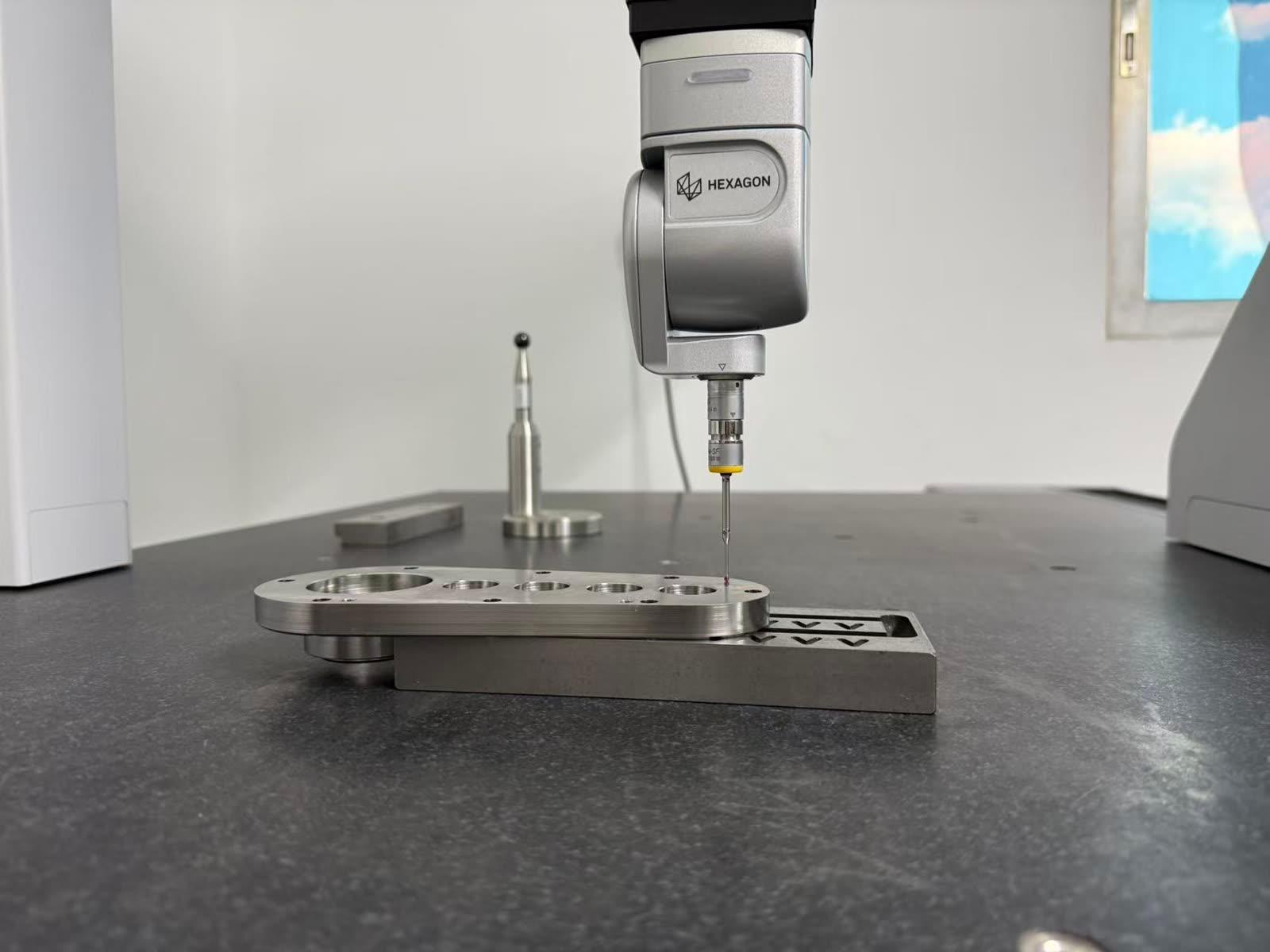
Geometric callouts are interpreted per ASME Y14.5 and ISO 1101, so drawings dimensioned to either standard are quoted and inspected without ambiguity. All GD&T measurements are performed on a Zeiss CMM with Calypso software, and first-article inspection reports are available with FAIR documentation.
Achievable Tolerances by Material
Material properties, thermal expansion, machinability, and springback, affect achievable tolerances. Here are the tightest tolerances we routinely hold for each material.
| Material | Tightest Achievable | Notes |
|---|---|---|
| Aluminum (6061, 7075) | ±0.003 mm | Best machinability. Standard tight tolerances routinely achieved. |
| Brass (C360) | ±0.003 mm | Free-machining. Excellent dimensional stability. |
| Stainless Steel 303 | ±0.005 mm | Good machinability vs other SS grades. Work-hardening limited. |
| Stainless Steel 316L | ±0.005 mm | Work-hardens. Requires sharp tools and controlled feeds. |
| Titanium Ti-6Al-4V | ±0.005 mm | Low thermal conductivity increases tool wear. Achievable with correct tooling. |
| 4140 Alloy Steel | ±0.005 mm | Heat treat distortion possible, machine after final heat treatment where possible. |
| PEEK | ±0.01 mm | Plastic creep under clamping load. Requires careful fixturing strategy. |
| Delrin (POM) | ±0.01 mm | Absorbs moisture, allow for environmental dimensional change in tight-fit applications. |
Design for Tolerance Tips
Applying these principles reduces cost and lead time while ensuring your parts meet functional requirements.
- Apply tolerances only where functionally required, tighter-than-necessary tolerances increase cost significantly (±0.01 mm may cost 2-5× more than ±0.1 mm for the same feature).
- Use GD&T rather than coordinate tolerances for mating features, true position controls location far better than bilateral +/- dimensions on X and Y separately.
- Provide a datum hierarchy on your 2D drawing, without clear datums, our engineers cannot guarantee that measured dimensions will match design intent.
- Specify surface finish only on functional surfaces, 'all surfaces Ra 0.8' adds unnecessary cost and lead time. Leave non-functional faces as machined.
- Design features to be accessible from one setup direction where possible, repositioning introduces additional error. 5-axis helps when this is unavoidable.
- Consider material spring-back for thin-walled parts, aluminum walls <2 mm and titanium walls <1.5 mm can deflect during cutting, effectively moving the surface from its nominal position.
- Thread callouts must specify form, class and depth, 'M8 thread' alone is ambiguous. Use 'M8×1.25-6H × 20mm deep' to be complete.
- For press or interference fits, specify the fit class (H7/p6, H7/n6) and let us calculate the actual dimension limits, ISO 286 fit notation is unambiguous and internationally understood.
Free DFM Review
Upload your drawing with your quote request. Our engineers review every file for tolerance conflicts, unmachinable features, missing datums and specification gaps, at no charge, before cutting starts.
Upload Files for ReviewInspection Reports Available
- First Article Inspection Report (FAIR)
- CMM Dimensional Report (Zeiss)
- Surface Roughness Certificate (Ra/Rz)
- Material Test Report (MTR / Mill Cert)
- PPAP Level 1-3 Documentation
- AS9102 First Article Inspection
Related Services
CNC Milling
3-axis, 4-axis & 5-axis milling tolerances and capabilities.
CNC Turning
Lathe and Swiss turning tolerance specs and diameter limits.
5-Axis Machining
Tightest tolerances on compound geometry in a single setup.
All Capabilities
EDM, grinding, CMM inspection and full machine park overview.
Need Parts to Tight Tolerances?
Upload your CAD files and drawings for a free DFM review. Our engineers will flag any tolerance or design issues before we quote.