Looking for CNC machining surface finishing options guidance? You are in the right place. This guide answers the key questions for engineers.
Why Surface Finishing Matters, CNC machining surface finishing options
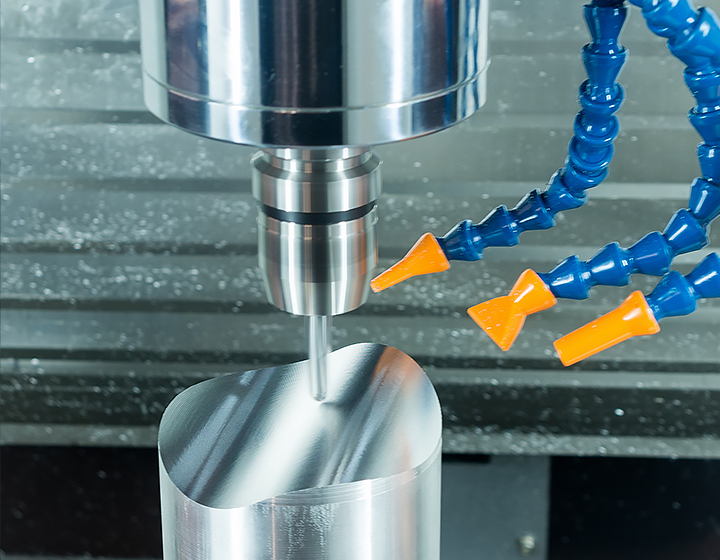
The surface finish applied to a CNC machined part affects corrosion resistance, hardness, friction, electrical conductivity, appearance. longevity. Choosing the wrong finish can mean a part that corrodes in a wet environment, seizes in an assembly, or fails aesthetics inspection.
This guide covers the most common surface finishing options available for CNC machined parts, with practical guidance on selection.
Anodizing (Type II and Type III), CNC machining surface finishing options
Anodizing is an electrochemical process that converts the surface of aluminum into aluminum oxide, a hard, porous ceramic layer that is integral to the part (not a coating that can peel).
Type II (standard anodizing) produces a layer 5-25 microns thick. The porous surface accepts dye in a wide range of colors before being sealed. Type II anodizing provides good corrosion resistance and a cosmetically excellent finish. It is the default finish for consumer electronics, sporting goods, and general industrial aluminum parts.
Type III (hard anodizing) produces a layer 25-125 microns thick. The thicker oxide layer is significantly harder (HV 400-600 vs HV 150-200 for Type II), providing excellent wear resistance. Hard anodizing is used for sliding surfaces, hydraulic components, and parts in abrasive environments. It is typically gray-to-black and can be PTFE-impregnated for low friction.
Best for: Aluminum 6061, 7075. Not applicable to steel, titanium, or copper.
Powder Coating, CNC machining surface finishing options
Powder coating applies a dry thermoplastic or thermoset powder electrostatically, then cures it in an oven at 180-200°C. The result is a thick (60-120 micron), tough, uniform coating with excellent impact resistance.
Powder coating is available in thousands of RAL and Pantone colors, gloss levels from matte to high-gloss. special textures. It is UV-stable, making it suitable for outdoor applications.
Best for: Steel, aluminum structures and enclosures where cosmetic finish and corrosion protection are both important. Not suitable for parts requiring tight dimensional tolerances, the coating adds 60-120 microns per surface.
PVD (Physical Vapor Deposition), CNC machining surface finishing options
PVD coatings are deposited in a vacuum chamber by vaporizing a target material (typically titanium nitride, chromium nitride, or diamond-like carbon) and condensing it onto the substrate. The result is an extremely thin (2-5 micron), extremely hard coating with very low friction.
Common PVD coatings:
- TiN (Titanium Nitride), gold color, HV 2000+, used on cutting tools and decorative hardware
- TiAlN (Titanium Aluminum Nitride), dark gray, HV 3000+, used on high-temperature cutting tools
- CrN (Chromium Nitride), silver-gray, HV 1800+, used on plastic injection mold components
- DLC (Diamond-Like Carbon), near-black, very low friction, used on engine components and premium consumer products
Best for: Wear-resistant surfaces, decorative hardware, medical instruments. Works on steel, stainless, titanium, and carbide.
Electroplating, CNC machining surface finishing options
Electroplating deposits a metal layer from a bath solution. Common options include:
- Nickel plating, silver appearance, good corrosion and wear resistance, 5-25 microns
- Chrome plating (hard chrome), very hard (HV 1000+), excellent wear resistance, 25-500 microns, used on hydraulic rods and cylinders
- Zinc plating, sacrificial corrosion protection on steel, 5-25 microns, then clear or yellow chromate sealed
- Gold plating, electrical contacts, connectors, where low contact resistance is essential
- Copper plating, often used as an undercoat for nickel or chrome
Best for: Functional requirements, wear resistance (hard chrome), corrosion protection (zinc), electrical contact (gold).
Passivation (Stainless Steel), CNC machining surface finishing options
Passivation removes free iron from the surface of stainless steel using nitric or citric acid, allowing the chromium in the alloy to form a dense, corrosion-resistant oxide layer. It does not change appearance but significantly improves corrosion resistance.
Passivation is specified per ASTM A967 or AMS 2700. It is standard practice for medical, food-processing, and marine stainless components.
Black Oxide, CNC machining surface finishing options
Black oxide is a conversion coating applied to steel by immersion in an alkaline salt solution at 130-145°C. The result is a matte black surface with minimal dimensional change (less than 1 micron). It provides mild corrosion resistance (improved with oil) and reduces light reflection.
Best for: Tooling, jigs and fixtures, firearm components, fasteners. Very cost-effective.
Polishing and Brushing, CNC machining surface finishing options
Mechanical finishing options:
- Bead blasting, uniform matte finish, hides machining marks, commonly used before anodizing
- Brushing (linear satin), unidirectional scratch pattern, popular for consumer electronics and panels
- Mirror polishing, Ra below 0.1 micron, used for optical components, mold cavities, and premium consumer products
Choosing the Right Finish, CNC machining surface finishing options
| Requirement | Recommended finish |
|---|---|
| Corrosion resistance, aluminum | Type II anodize |
| Wear resistance, aluminum | Type III hard anodize |
| Color and appearance, aluminum | Type II anodize + dye |
| Corrosion + impact resistance, steel | Zinc plate + powder coat |
| Wear resistance, steel | Hard chrome or PVD |
| Food/medical grade, stainless | Passivation |
| Economy corrosion protection, steel | Zinc plate or black oxide |
Ginwate offers 30+ surface finishes with in-house anodizing, passivation, bead blasting. polishing, plus a network of plating and PVD partners. Specify your finish on the quote form and we will price it automatically.
Related Ginwate Resources, CNC machining surface finishing options
- Manufacturing Capabilities, 200+ machines, ±0.001mm tolerance
- Tolerances Reference
- Surface Finishes Guide
- Materials Catalog
- Get a Free DFM Quote, engineer response in 4 hours
- Case Studies
References: ISO 2768 General Tolerances and CNC on Wikipedia.
FAQs about CNC machining surface finishing options
Is CNC machining surface finishing options right for every project?
No. CNC machining surface finishing options fits some jobs better than others. We help you pick the right spec for your part. Tell us your load, heat, and budget, and we will steer you to the best choice. Most clients save money by picking the right grade up front, not the most premium one.
How fast can Ginwate ship CNC machining surface finishing options parts?
For most CNC machining surface finishing options jobs we quote in four hours. Lead time runs five to ten days for prototypes. Production runs land in two to three weeks. Rush jobs ship in 72 hours when stock is on hand. Send your CAD file to start.
What tolerances can you hold for CNC machining surface finishing options?
Most CNC machining surface finishing options parts hold plus or minus 0.02 mm without trouble. Tighter tols are possible with the right fixturing and a final grind pass. We hit ISO 2768-fH on first try for the bulk of jobs. Spec the tols you need, not tighter than that.
Do you offer DFM review for CNC machining surface finishing options?
Yes. Every quote includes a free DFM review by a senior engineer. We flag hard features, costly tols, and cheaper paths. This pays back fast, most parts get five to twenty percent cheaper after the review. No fee for this service.

Written by
Chenny
Senior CNC engineer at Ginwate · 20+ years aerospace & medical machining