Looking for CNC machining medical devices guidance? You are in the right place. This guide answers the key questions for engineers.
Medical device manufacturing has one rule above all others: the part must do exactly what was specified, every single time. CNC machining sits at the centre of that promise, from titanium implants and surgical instruments to diagnostic equipment housings and pharmaceutical fittings.
Why Medical Parts Are Different, CNC machining medical devices
Three factors separate medical-grade CNC work from general industrial machining:
1. Biocompatibility, the material must not harm tissue, blood, or the body chemistry
2. Sterilisation, parts often see autoclave (134C steam), gamma, EtO, or chemical sterilisation cycles repeatedly
3. Traceability, every part must be linked back to a heat lot, a process record, and an inspector
Common Medical-Grade Materials, CNC machining medical devices
Titanium Grade 5 (Ti-6Al-4V) and Grade 23 (ELI), CNC machining medical devices
The gold standard for orthopaedic and dental implants. Strength-to-weight ratio is excellent, biocompatibility is established under ISO 5832-3. Grade 23 (Extra Low Interstitials) is the surgical-implant variant with tighter chemistry control.
Stainless Steel 316L and 17-4 PH, CNC machining medical devices
316L is the workhorse for surgical instruments, fluid path components, and external fixtures. 17-4 PH is used where higher strength is needed. Both pass ISO 10993 biocompatibility when properly passivated.
PEEK (Medical Grade), CNC machining medical devices
Increasingly used for spinal implants, trauma fixation, and dental abutments. Radiolucent, it will not shadow CT or X-ray. Biocompatible and autoclavable. Medical-grade PEEK is supplied with full material traceability.
Aluminium 6061-T6 and 7075-T6, CNC machining medical devices
Not biocompatible for implants but widely used in non-contact medical equipment: imaging frames, pump housings, robotic arm components.
Tolerance Practices, CNC machining medical devices
| Feature | Typical Tolerance |
|---|---|
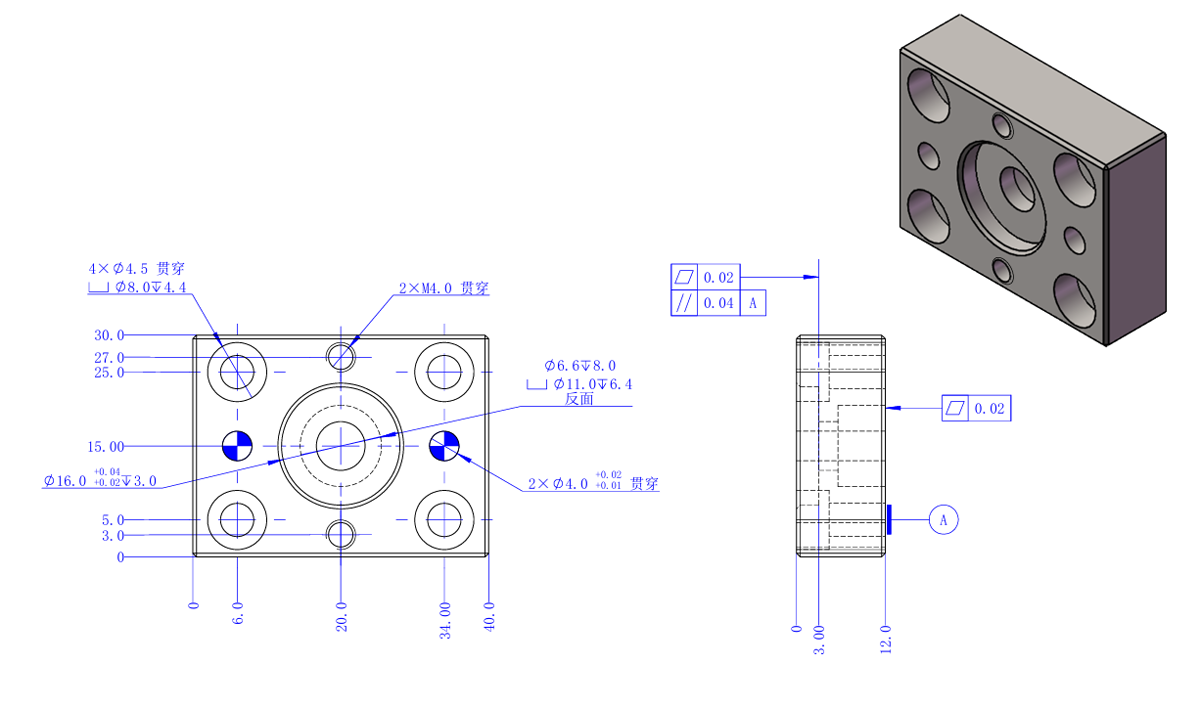
| Mating bores for instruments | +-0.013mm |
| Implant articulating surfaces | +-0.005mm |
| Threaded interfaces | Class 3B/3A |
| Sealing face flatness | 0.005mm |
| General contours | +-0.025-0.05mm |
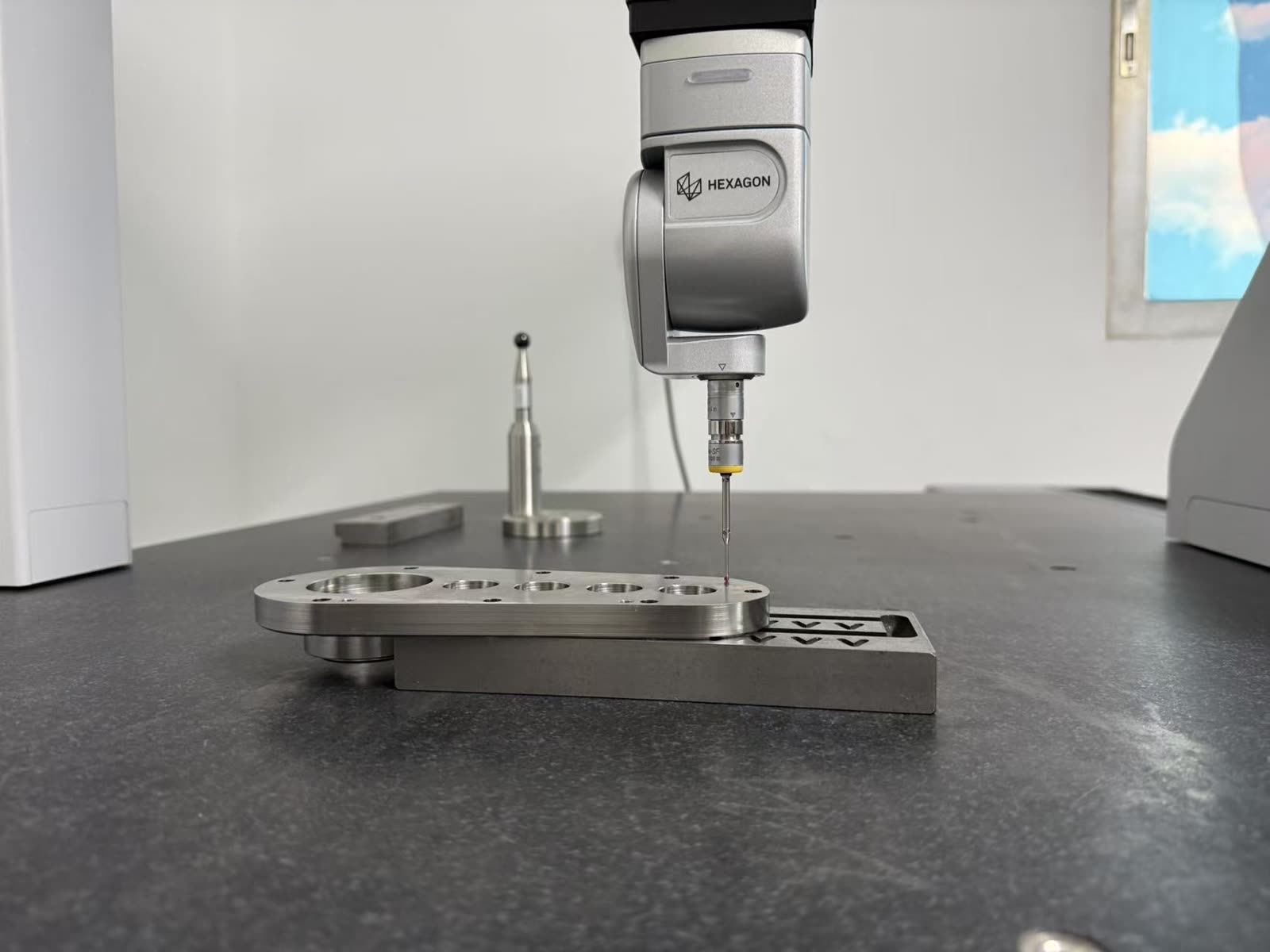
The bigger story is inspection: every dimension on a medical drawing typically gets recorded on a CMM report with full process capability data (Cpk 1.33 minimum) for production runs.
Surface Finish Requirements
- Implants (bone interface): Ra 1.6-6.3um to encourage osseointegration
- Implants (articulating surface): Ra 0.05um mirror polish
- Surgical instrument cutting edges: Ra 0.2um or better
- Fluid path components: Ra 0.4-0.8um with electropolish
Sterilisation Compatibility
| Method | Conditions | Notes |
|---|---|---|
| Steam autoclave | 121-134C | Stainless, Ti, PEEK fine |
| Gamma irradiation | 25-40 kGy | Most metals fine |
| EtO gas | 50-60C | Compatible with most materials |
| H2O2 plasma | Low temperature | Good for heat-sensitive parts |
Required Certifications
A medical CNC supplier should hold:
- ISO 9001, base quality management system
- ISO 13485, medical-device-specific QMS, the de facto requirement for contract medical machining
- Material certificates (3.1 or 3.2 per EN 10204) with chemistry traceable to heat lot
- Validated cleaning processes, ultrasonic, alkaline, deionised water rinse, clean-pack workflow
Common Pitfalls
1. Specifying medical grade without naming a standard, call out ASTM F138 or ISO 5832-1 explicitly
2. Forgetting passivation, bare 316L is not ISO 10993 compliant until passivated per ASTM A967
3. Treating sterilisation as someone elses problem, material choice must support the chosen method
4. Skipping process validation for production, a passing first article does not guarantee the 10,000th part
Get a free quote and DFM review for your medical device project from [Ginwate CNC](https://ginwatecnc.com/contact), we work with implant, surgical instrument. diagnostic equipment OEMs under ISO 13485 with full lot traceability.
Related Ginwate Resources
- Manufacturing Capabilities, 200+ machines, ±0.001mm tolerance
- Tolerances Reference
- Surface Finishes Guide
- Materials Catalog
- Get a Free DFM Quote, engineer response in 4 hours
- Case Studies
References: ISO 2768 General Tolerances and CNC on Wikipedia.
FAQs about CNC machining medical devices
Is CNC machining medical devices right for every project?
No. CNC machining medical devices fits some jobs better than others. We help you pick the right spec for your part. Tell us your load, heat, and budget, and we will steer you to the best choice. Most clients save money by picking the right grade up front, not the most premium one.
How fast can Ginwate ship CNC machining medical devices parts?
For most CNC machining medical devices jobs we quote in four hours. Lead time runs five to ten days for prototypes. Production runs land in two to three weeks. Rush jobs ship in 72 hours when stock is on hand. Send your CAD file to start.
What tolerances can you hold for CNC machining medical devices?
Most CNC machining medical devices parts hold plus or minus 0.02 mm without trouble. Tighter tols are possible with the right fixturing and a final grind pass. We hit ISO 2768-fH on first try for the bulk of jobs. Spec the tols you need, not tighter than that.
Do you offer DFM review for CNC machining medical devices?
Yes. Every quote includes a free DFM review by a senior engineer. We flag hard features, costly tols, and cheaper paths. This pays back fast, most parts get five to twenty percent cheaper after the review. No fee for this service.
Key Takeaways on CNC machining medical devices
The right plastic or metal pick saves time and money. CNC machining medical devices is one piece of the puzzle. Match the spec to the load, heat, and chemicals your part will see. Pick simple geometry where you can. Spec tight tols only where they matter. We are here to help at every step.
Ginwate has shipped CNC machining medical devices parts for hundreds of clients. We work with start-ups and Fortune 500 teams. Our shop runs eight CNC mills and four lathes. We hit lead times of five to ten days for most jobs. Quality is checked at every stage. We back our work with a full quality report.
Want to learn more about CNC machining medical devices? Browse our other guides above. Or send your part files for a free quote. We will get back to you in four hours.

Written by
Roger (罗欢)
Senior CNC engineer at Ginwate · 20+ years aerospace & medical machining