Looking for CNC machining tolerances guidance? You are in the right place. This guide answers the key questions for engineers.
What Is a Tolerance in CNC Machining?, CNC machining tolerances
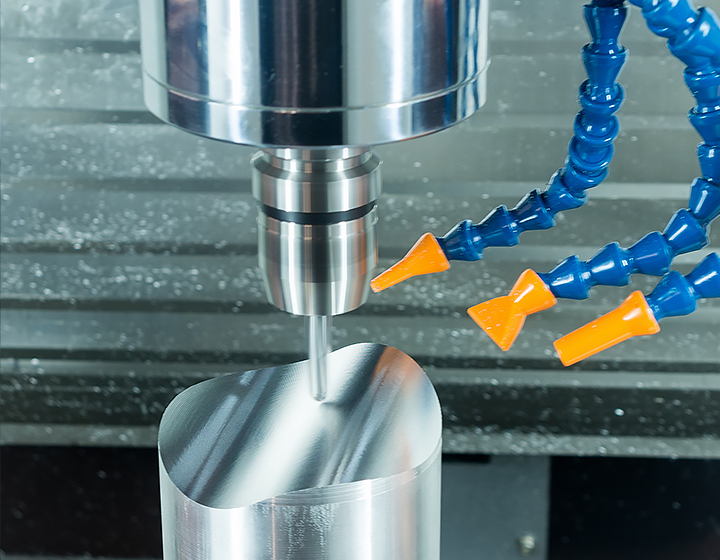
A tolerance is the permissible variation from a nominal dimension. When a drawing specifies a shaft diameter of 25 mm ±0.02 mm, the machinist may produce anything between 24.98 mm and 25.02 mm, the part is still within spec. Tolerances exist because perfect dimensions are physically impossible and economically impractical.
Understanding tolerances is one of the most important skills in mechanical design. Specifying tolerances that are too tight drives up cost and lead time. Specifying tolerances that are too loose results in parts that do not fit or function correctly.
ISO 2768: The International Tolerance Standard, CNC machining tolerances
ISO 2768 defines general tolerances for linear dimensions, angular dimensions, and geometric features. It removes the need to callout tolerances on every dimension of a drawing, you simply state "ISO 2768-m" in the title block and every un-toleranced dimension automatically inherits a standard grade.
Linear dimension grades, CNC machining tolerances
| Grade | Symbol | Typical application |
|-------|--------|---------------------|
| Fine | f | Precision mechanisms, tight fits |
| Medium | m | General engineering |
| Coarse | c | Large structures, non-critical |
| Very coarse | v | Rough castings, forgings |
ISO 2768-m (medium) is the most common general-purpose grade. For a 25 mm dimension it allows ±0.1 mm variation, which is achievable on any modern CNC machine without extra care.
ISO 2768-f (fine) is the grade most contract manufacturers like Ginwate use as a standard default, allowing ±0.05 mm on that same 25 mm dimension.
Geometric tolerance grades (Part 2), CNC machining tolerances
ISO 2768 Part 2 covers form and position tolerances, straightness, flatness, roundness, and so on. These are graded H, K, and L, and are often combined: "ISO 2768-mK" is a very common callout.
When to Specify Tight Tolerances, CNC machining tolerances
Tight tolerances (±0.01 mm or tighter) are necessary when:
- Mating parts must assemble with a specific fit, interference fits, clearance fits, or transition fits as defined by ISO 286 (hole/shaft tolerance system)
- Sealing surfaces, o-ring grooves, hydraulic ports
- Bearing housings and bores, standard bearings have tightly defined outer diameters
- High-speed rotating components, imbalance increases dramatically with poor concentricity
Rule of thumb: only specify a tight tolerance if you can explain what will go wrong without it.
The Cost Impact of Tighter Tolerances, CNC machining tolerances
Tighter tolerances take longer to achieve and require more inspection. The relationship is roughly:
- ±0.1 mm, standard milling or turning, no extra cost
- ±0.05 mm, achievable without special care, minimal premium
- ±0.02 mm, requires careful machine setup, some premium
- ±0.01 mm, requires grinding or fine boring, significant premium
- ±0.001 mm, requires precision grinding, CMM verification, big premium
At Ginwate we routinely hold ±0.001 mm on bearing surfaces using our Zeiss CMM coordinate measuring equipment and precision cylindrical grinders.
Inspecting to Tolerance, CNC machining tolerances
Every part leaving our facility is inspected against its drawing. Common measurement tools include:
- Vernier calipers, ±0.02 mm resolution, general dimensions
- Micrometer, ±0.001 mm, external diameters and wall thickness
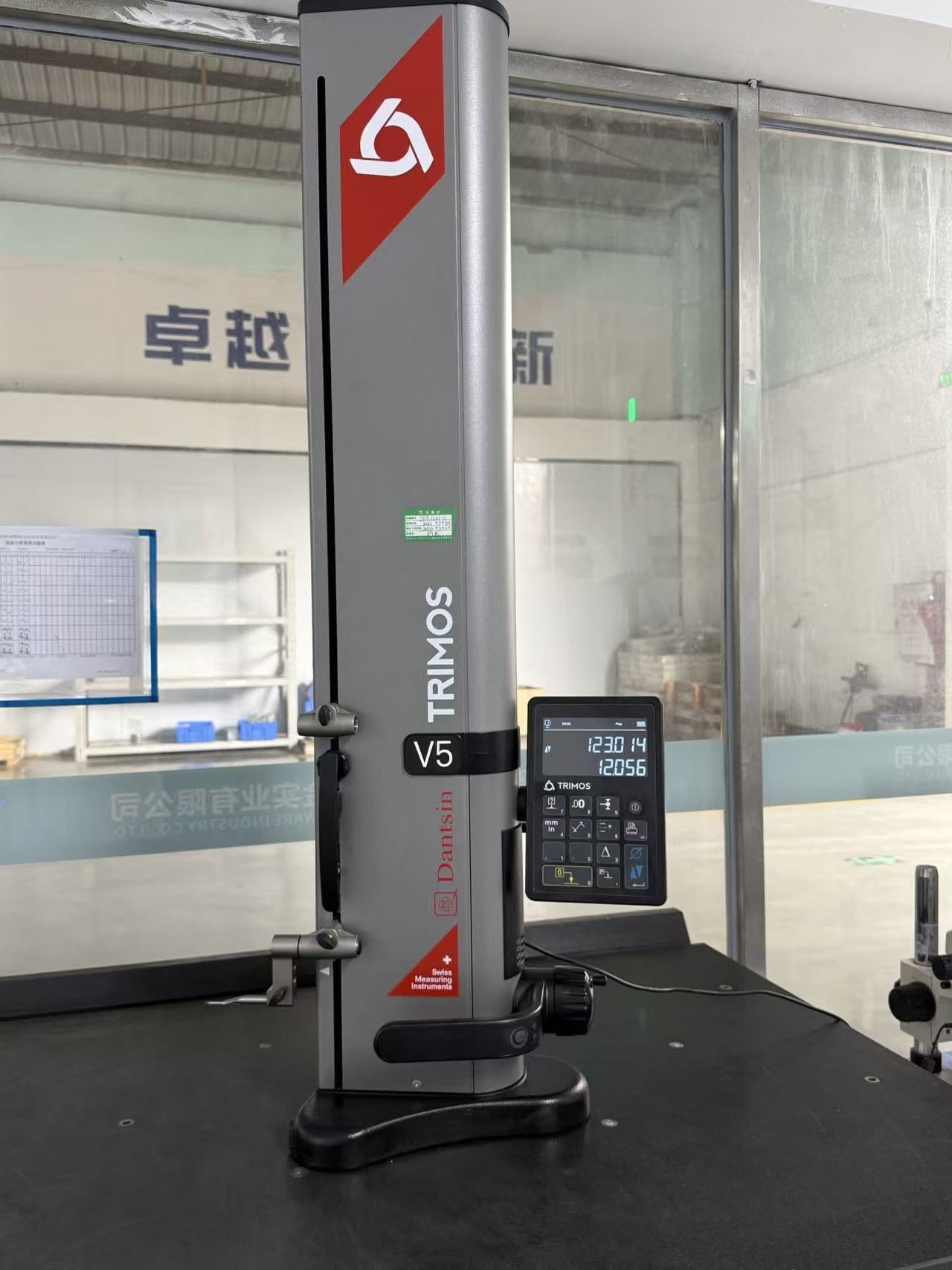
- CMM (Coordinate Measuring Machine), full 3D point cloud inspection, complex geometry
- Height gauge, step heights, groove depths
- Pin gauges and ring gauges, go/no-go inspection for holes and shafts
Our Zeiss CMM can measure to sub-micron accuracy, giving clients full inspection reports in PDF format for critical components.
Practical Tips for Specifying Tolerances, CNC machining tolerances
1. Use ISO 2768-m or ISO 2768-f in the title block, this covers 80% of dimensions automatically
2. Only add explicit tolerances to functional dimensions, mating interfaces, datum surfaces, critical features
3. Use ISO 286 fits for standard fits, H7/g6, H7/k6, etc. rather than inventing custom numbers
4. Symmetrical tolerances are cheaper, ±0.05 mm is easier to hit than +0 / -0.1 mm
5. Match tolerance to measurement capability, do not specify ±0.001 mm if the part can only be measured with a ±0.01 mm instrument
Ginwate Standard Tolerance Offering
Our standard CNC machining tolerance is ±0.01 mm for features where tolerance is explicitly called out, and ISO 2768-f for general dimensions. We can achieve ±0.001 mm on request with CMM-verified inspection reports.
If you are unsure what tolerances your design needs, upload your drawing to our quote page and our engineers will flag any dimensions that may be driving unnecessary cost, free as part of every quote.
Related Ginwate Resources
- Manufacturing Capabilities, 200+ machines, ±0.001mm tolerance
- Tolerances Reference
- Surface Finishes Guide
- Materials Catalog
- Get a Free DFM Quote, engineer response in 4 hours
- Case Studies
References: ISO 2768 General Tolerances and CNC on Wikipedia.
FAQs about CNC machining tolerances
Is CNC machining tolerances right for every project?
No. CNC machining tolerances fits some jobs better than others. We help you pick the right spec for your part. Tell us your load, heat, and budget, and we will steer you to the best choice. Most clients save money by picking the right grade up front, not the most premium one.
How fast can Ginwate ship CNC machining tolerances parts?
For most CNC machining tolerances jobs we quote in four hours. Lead time runs five to ten days for prototypes. Production runs land in two to three weeks. Rush jobs ship in 72 hours when stock is on hand. Send your CAD file to start.
What tolerances can you hold for CNC machining tolerances?
Most CNC machining tolerances parts hold plus or minus 0.02 mm without trouble. Tighter tols are possible with the right fixturing and a final grind pass. We hit ISO 2768-fH on first try for the bulk of jobs. Spec the tols you need, not tighter than that.
Do you offer DFM review for CNC machining tolerances?
Yes. Every quote includes a free DFM review by a senior engineer. We flag hard features, costly tols, and cheaper paths. This pays back fast, most parts get five to twenty percent cheaper after the review. No fee for this service.
Key Takeaways on CNC machining tolerances
The right plastic or metal pick saves time and money. CNC machining tolerances is one piece of the puzzle. Match the spec to the load, heat, and chemicals your part will see. Pick simple geometry where you can. Spec tight tols only where they matter. We are here to help at every step.
Ginwate has shipped CNC machining tolerances parts for hundreds of clients. We work with start-ups and Fortune 500 teams. Our shop runs eight CNC mills and four lathes. We hit lead times of five to ten days for most jobs. Quality is checked at every stage. We back our work with a full quality report.
Want to learn more about CNC machining tolerances? Browse our other guides above. Or send your part files for a free quote. We will get back to you in four hours.

Written by
Redowan Islam
Senior CNC engineer at Ginwate · 20+ years aerospace & medical machining