Werkstoffe nach Anwendung
| Anwendung | Gängige Werkstoffe | Warum |
|---|---|---|
| Chirurgische Instrumente, Griffe | 316L Edelstahl, Ti-6Al-4V (Grade 5) | Autoklavierbar, biokompatibel, korrosionsbeständig |
| Implantate (orthopädisch) | Ti-6Al-4V ELI (Grade 23), CoCr | Biokompatibel, ermüdungsbeständig, MRT-tauglich (Ti) |
| Dentale Komponenten | Grade 2 CP Ti, PEEK | Biokompatibilität + Osseointegration |
| Endoskopgehäuse | 316L, Aluminium 6061 | Leicht + sterilisierbar |
| Einweg-Komponenten | PEEK, POM, PC | Kosteneffizient + sterilisierbar |
Anforderungen an die Oberflächengüte
- Implantate: typischerweise Ra ≤ 0, 4 µm. Geringere Rauheit = bessere Gewebeverträglichkeit.
- Verbindungsflächen (z. B. Schraubgewinde im Knochen): Spezifische Textur bewusst gewählt, Ra 1, 6-3, 2 µm, um die Osseointegration zu fördern.
- Chirurgische Instrumente: Ra ≤ 0, 8 µm auf anwenderzugewandten Flächen, elektropoliert oder passiviert.
- Einwegprodukte: Zerspanungszustand akzeptabel, sofern die Schnittstelle nicht kritisch ist.
Erforderliche Dokumentation
- Materialzeugnis (EN 10204 3.1), rückverfolgbar bis zur Schmelzcharge
- Biokompatibilitätsdokumentation, bei Werkstoffen in Implantatqualität ist das Walzwerkzeugnis des Lieferanten der Ausgangspunkt; die abschließende Biokompatibilität (ISO 10993) liegt in der Verantwortung des Geräteherstellers
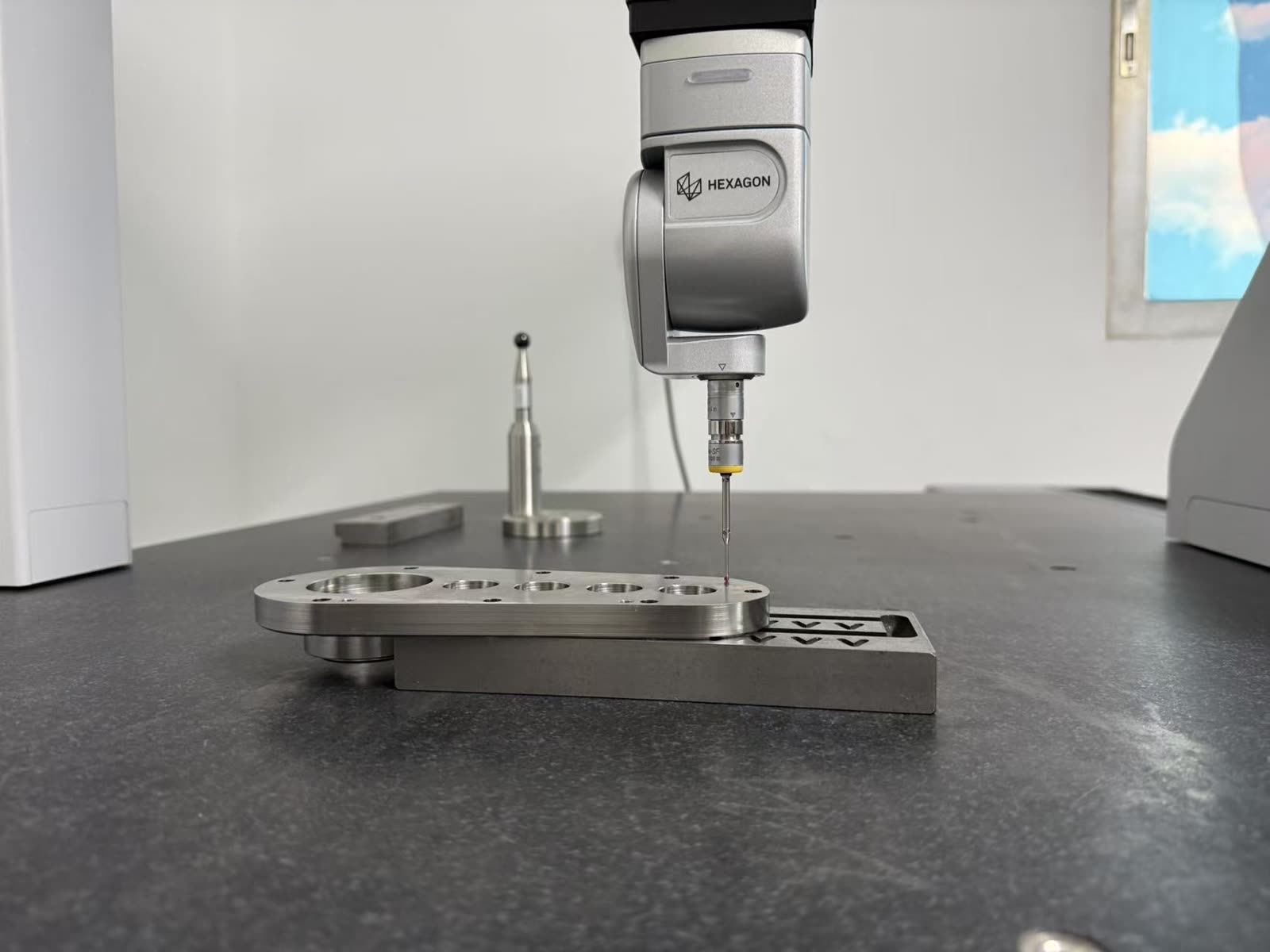
- Maßprüfung (CMM-Bericht), jedes kritische Merkmal gemessen
- Passivierungszeugnis, für Edelstahl, ASTM A967 oder AMS 2700
- Messung der Oberflächengüte, Ra-Wert je kritischem Merkmal dokumentiert
- Chargenrückverfolgbarkeit, Lieferantenaufzeichnungen, die Ihre Fertigteile mit der Schmelzcharge des Rohmaterials verknüpfen
Was CNC-Werkstätten typischerweise NICHT abdecken
- FDA 510(k)-Einreichung, das ist Aufgabe des Geräteherstellers. Die Werkstatt liefert die maßlichen und werkstofflichen Nachweise.
- Endsterilisation, wird in der Regel vom Gerätehersteller oder einem Sterilisationsdienst durchgeführt.
- Abschließende Biokompatibilitätsprüfung nach ISO 10993, wird von zertifizierten Prüflaboren durchgeführt, nicht von der Bearbeitungswerkstatt.
- Designverifizierung, die Werkstatt fertigt nach Ihren Vorgaben; die Verifizierung des Designs gegenüber dem Verwendungszweck liegt bei Ihnen.
Was auf der Zeichnung anzugeben ist
- Werkstoffsorte mit vollständiger Spezifikation (z. B. "Ti-6Al-4V ELI per ASTM F136")
- Angabe der Oberflächengüte auf jeder kritischen Fläche
- Passivierungsanforderung und -norm (bei Edelstahl)
- "Frei von Kühlschmierstoffrückständen", falls zutreffend
- Reinigungs- und Verpackungsanforderungen (reinraumverpackt, einzeln verpackt usw.)
Ginwate bearbeitet Ti-6Al-4V, 316L, PEEK und weitere biokompatible Werkstoffe mit vollständiger Chargenrückverfolgbarkeit und Passivierung. Sehen Sie die Fallstudie zum medizinischen 316L-Gehäuse oder fordern Sie ein Angebot an.

Geschrieben von
Chenny
Leitender CNC-Ingenieur bei Ginwate · 20+ Jahre Luftfahrt- und Medizintechnik