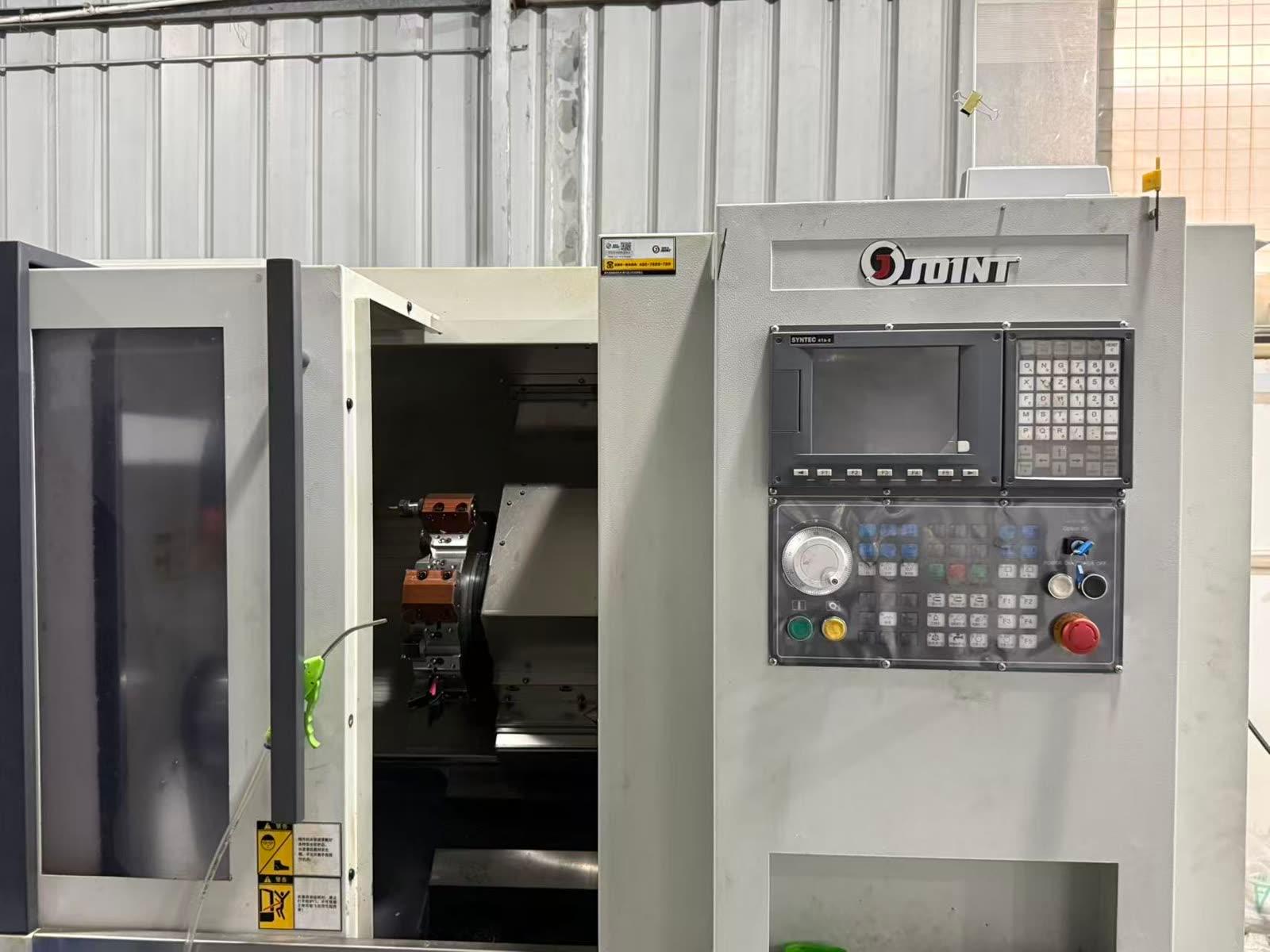
CNC-Frässervice,
3-Achs-, 5-Achs- & Hochgeschwindigkeitsfräsen
Von einfachen prismatischen Halterungen bis zu komplexer Luft- und Raumfahrtgeometrie liefern unsere 200+ CNC-Maschinen präzise gefräste Teile mit Toleranzen bis zu ±0,001 mm, termingerecht, jedes Mal.
Was ist CNC-Fräsen?
CNC-Fräsen ist ein subtraktives Bearbeitungsverfahren, bei dem computergesteuerte rotierende Schneidwerkzeuge Material von einem festen Werkstück abtragen. Unlike turning, which spins the part, milling spins the tool and moves it across a stationary or indexed workpiece along multiple linear and rotational axes.
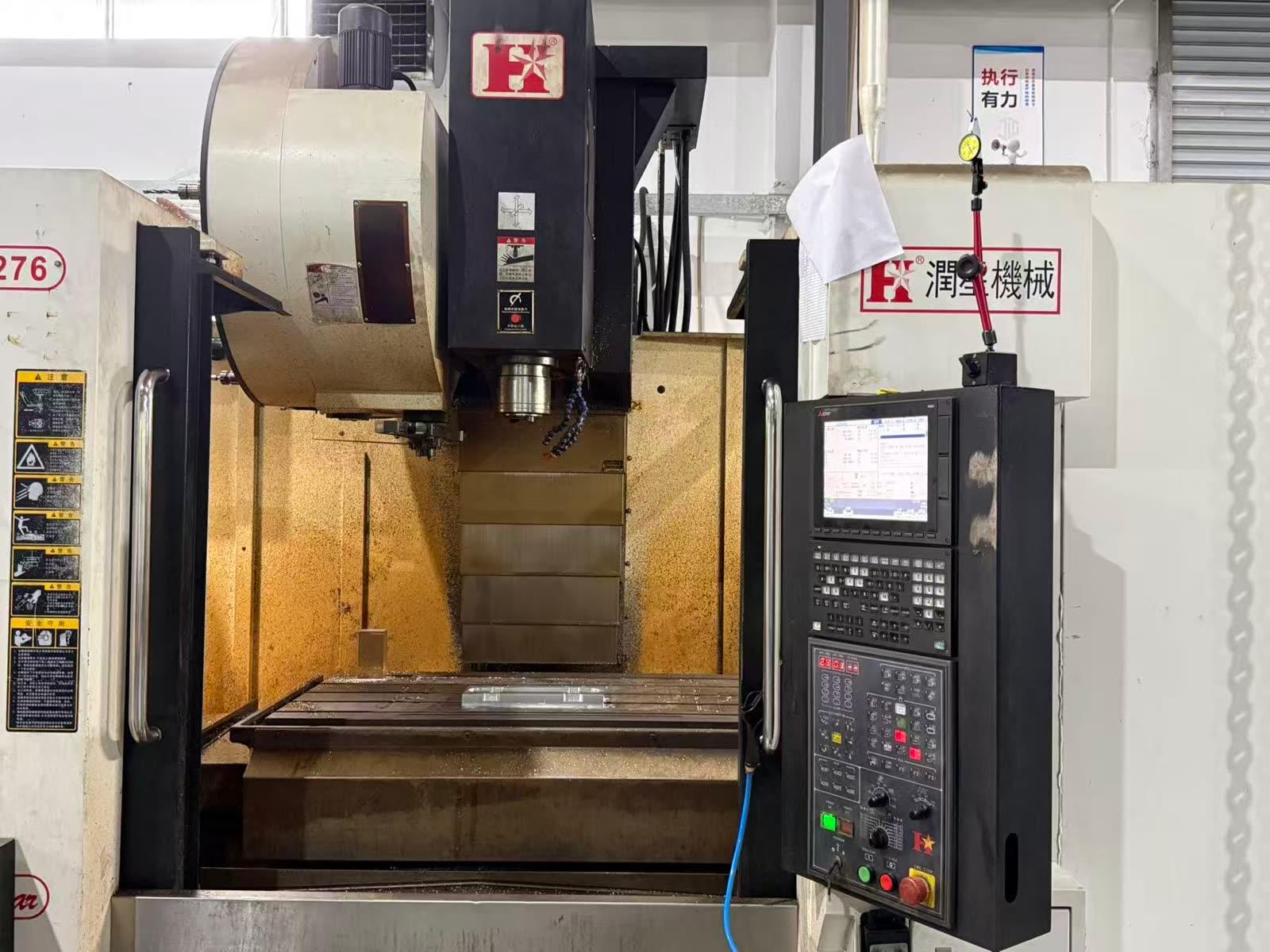
3-axis milling moves the cutter in X, Y and Z, sufficient for the majority of prismatic features: flat surfaces, pockets, slots and drilled holes. It is the most cost-effective approach for parts where all features are accessible from one face or a small number of setups.
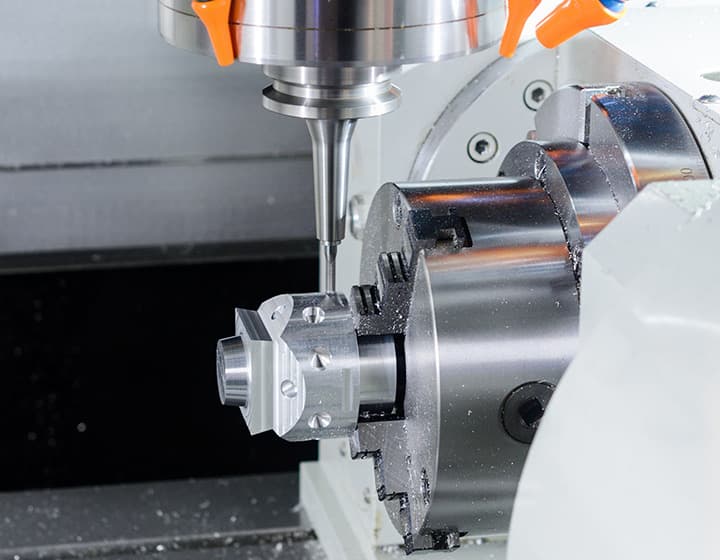
5-axis simultaneous milling adds two rotational axes (A and B, or A and C), letting the spindle approach the workpiece from virtually any angle in a single clamping. This eliminates repositioning errors and is essential for compound-curve aerospace surfaces, medical bone plates, and turbomachinery components. Learn more on our dedicated 5-axis page.
Choose 3-axis for flat or simply stepped geometry. Choose 4- or 5-axis when your part has compound angles, undercuts, or when you need to minimize setups to hit tight positional tolerances across multiple faces.
CNC-Fräsverfahren
Wir betreiben 3-Achs-, 4-Achs- und 5-Achs-CNC-Fräszentren. Die richtige Wahl hängt von der Teilegeometrie, Losgröße und erforderlichen Toleranz ab.
3-Achs-Fräsen
The workhorse of CNC milling. Three linear axes (X, Y, Z) handle the vast majority of prismatic parts, housings, brackets, plates, and blocks with flat or gently contoured surfaces.
- Standard tolerance ±0.01mm
- Flat & contoured surfaces
- Pockets, slots & through-holes
- Max part 600 × 400 × 300 mm
Ideal for: brackets, enclosures, plates, jigs and fixtures
4-Achs-Fräsen
A rotary A-axis added to 3-axis movement. Parts can be indexed or continuously rotated during cutting, eliminating secondary setups for features around a cylindrical or complex profile.
- Rotational features in one setup
- Complex profiles & cams
- Reduced fixturing cost
- Excellent for shaft-style parts
Ideal for: cams, impeller blanks, manifolds with radial features
5-Achs-Fräsen
Simultaneous 5-axis movement lets the cutter approach from any direction. Complex compound curves, undercuts, and tight cavities are cut in a single setup, reducing errors and cycle time.
- Achievable tolerance ±0.001mm
- Aerospace & medical geometry
- Single-setup complex parts
- Undercuts & compound curves
Ideal for: turbine blades, medical implants, aerospace structural parts
Mehr erfahrenSpezifikationsvergleich
Schnellreferenz für unsere 3-Achs- und 5-Achs-Fräsdienstleistungen.
| Spezifikation | 3-Achs | 5-Achs |
|---|---|---|
| Standardtoleranz | ±0.01 mm | ±0.005 mm |
| Hochpräzision | ±0.005 mm | ±0.001 mm |
| Max. Teilgröße | 600 × 400 × 300 mm | 500 × 400 × 250 mm |
| Min. Merkmalsgröße | 0.5 mm | 0.3 mm |
| Min. Wandstärke | 0.5 mm | 0.4 mm |
| Max. Tiefe/Breite | 4:1 | 6:1 |
| Oberflächengüte Ra | 0.8 μm std | 0.4 μm std |
Erreichbare Toleranzen hängen von Material, Teilegeometrie und Merkmalsgröße ab. Kontaktieren Sie uns für eine DFM-Prüfung bei kritischen Maßen.
Werkstoffe
Wir lagern und bearbeiten 50+ Metalle und technische Kunststoffe. Übliche CNC-Fräswerkstoffe:
Oberflächenbehandlungen
Alle Oberflächenbehandlungen im Haus verfügbar. Lieferzeit und Kosten hängen vom Verfahren ab.
Wie bearbeitet
Ra 1.6-3.2 μm direct off the machine. Clean, functional surfaces with visible tool marks.
Eloxieren (Typ II & III)
Electrochemical oxide layer on aluminum. Type II decorative; Type III hard for wear resistance.
Hartanodisieren
Type III anodizing to 25-125 μm. Excellent hardness (60-70 HRC equivalent) and dielectric properties.
Glasperlenstrahlen
Uniform matte texture, Ra 0.8-2.0 μm. Removes machining marks and improves aesthetics.
Pulverbeschichtung
Durable polymer finish in any RAL/Pantone color. Impact and corrosion resistant.
Elektropolieren
Electrochemical surface smoothing. Reduces Ra by 50%, ideal for stainless steel medical parts.
Vernickeln
Electroless or electrolytic nickel. Corrosion resistance, solderability, or as undercoat for chrome.
Lasergravur
Permanent part marking, serial numbers, logos, QR codes. No mask or ink required.
CNC-Fräsdesign-Richtlinien
Diese Richtlinien helfen Ihnen, genaue Angebote zu erhalten, kostspielige Umkonstruktionen zu vermeiden und sicherzustellen, dass Ihre Teile fertigbar sind.
- Minimum wall thickness 0.5 mm for metals, 1.0 mm for plastics, thinner walls vibrate during cutting and can deflect.
- Inside corner radius ≥ 1/3 of cavity depth, end mill diameter must fit the corner radius; design accordingly.
- Avoid deep narrow slots (depth > 6× width), tool deflection and chip evacuation become critical beyond this ratio.
- Specify surface finish Ra only where functionally required, unnecessary finishing callouts add cost and lead time.
- Add draft to vertical walls only if needed for function, draft is for molding, not machining; omit unless necessary.
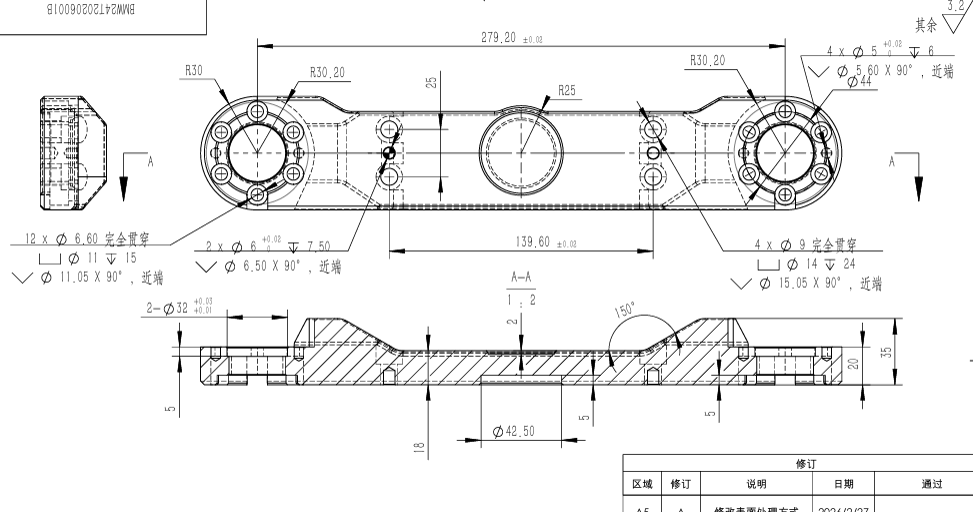
- Provide a 2D drawing for GD&T callouts and tight tolerances, model alone cannot convey datum references or geometric tolerances.
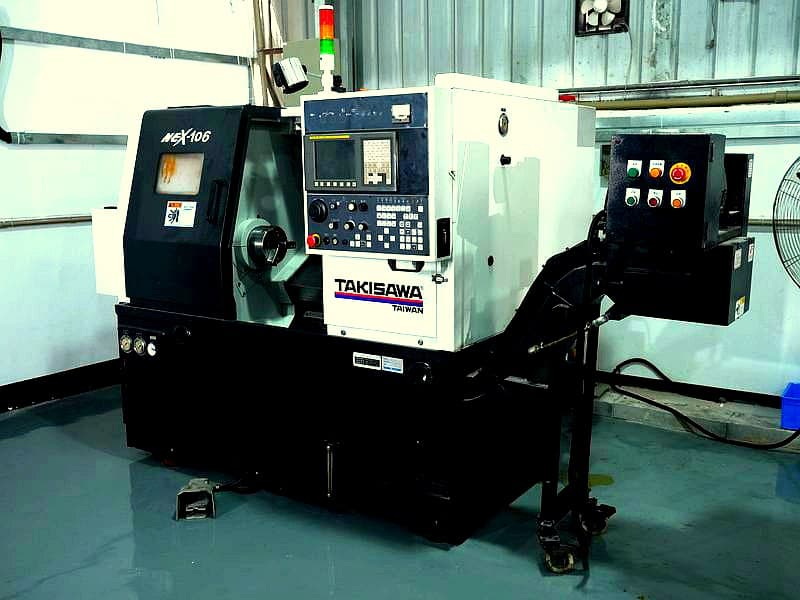
DFM-Prüfung benötigt?
Laden Sie Ihre CAD-Dateien mit Ihrer Angebotsanfrage hoch. Unsere Ingenieure bieten eine kostenlose DFM-Analyse an, ohne Aufpreis.
Kostenlose DFM-Prüfung anfordernBediente Branchen
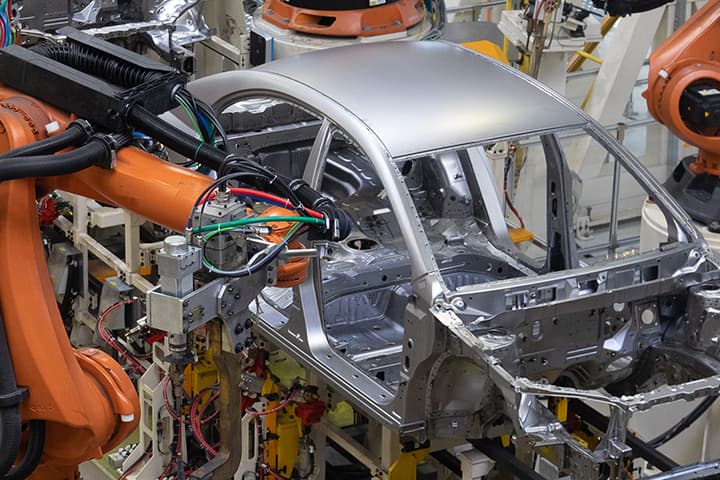
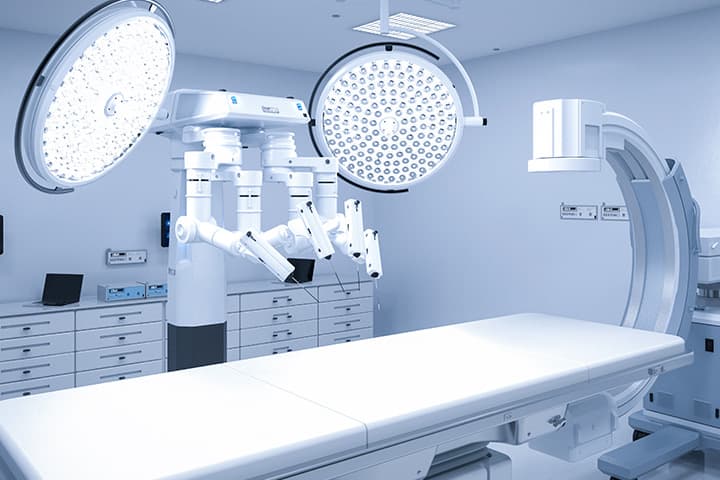
Unsere CNC-Fräskapazitäten dienen anspruchsvollen Anwendungen in sechs Branchen.

Verwandte Leistungen
Häufig gestellte Fragen
Was ist der Unterschied zwischen 3-Achs-, 4-Achs- und 5-Achs-CNC-Fräsen?+
Beim 3-Achs-Fräsen bewegt sich das Werkzeug in X, Y und Z und eignet sich für flache und prismatische Teile. 4-Achs ergänzt eine Drehachse, um ein Teil ohne Umspannen rundum zu bearbeiten. 5-Achs ergänzt eine zweite Drehachse, sodass das Werkzeug in einer Aufspannung fast jede Fläche erreicht, ideal für komplexe Konturen. Wir bieten alle drei und wählen die wirtschaftlichste Variante für Ihr Teil.
Welche Toleranzen erreicht Ihr CNC-Fräsen?+
Unser CNC-Fräsen hält Standardtoleranzen von ±0,005 mm und engere Toleranzen bis ±0,001 mm an kritischen Merkmalen, mit Oberflächengüten bis Ra 0,4 μm. Kritische Maße werden per CMM geprüft und auf Wunsch mit Prüfbericht geliefert.
Welche Werkstoffe können Sie CNC-fräsen?+
Wir fräsen Aluminium (6061, 7075), Edelstahl (303, 304, 316L), Titan, Messing, Kupfer, Bau- und Werkzeugstähle sowie technische Kunststoffe wie PEEK, POM und Nylon. Für Luftfahrt- und Medizinteile sind Werkstoffzertifikate und Rückverfolgbarkeit verfügbar.
Gibt es eine Mindestbestellmenge für CNC-gefräste Teile?+
Nein. Es gibt keine Mindestbestellmenge. Wir fräsen vom Einzelprototyp bis zur Serie, mit denselben Toleranzen und demselben Qualitätsprozess für jedes Teil.
Wie schnell erhalte ich ein CNC-Fräsangebot?+
Laden Sie Ihre 3D-STEP-Datei und 2D-Zeichnung hoch und Sie erhalten innerhalb von 1 bis 12 Stunden ein detailliertes Angebot mit kostenloser DFM-Prüfung. Die Lieferzeit für die meisten gefrästen Teile beträgt 3 bis 10 Arbeitstage.
Bieten Sie 5-Achs-CNC-Fräsen für komplexe Teile an?+
Ja. Neben 3-Achs- und 4-Achs-Fräsen bieten wir vollsimultane 5-Achs-Bearbeitung für komplexe Konturen, Hinterschnitte sowie Luftfahrt- und Medizinteile, alles nach ISO 9001 + 14001 zertifizierter Qualität.
Bereit, Ihre Teile zu fräsen?
Laden Sie Ihre CAD-Dateien hoch und erhalten Sie innerhalb von 24 Stunden ein detailliertes CNC-Fräsangebot. Keine Mindestbestellmenge.
Need turning too? If your part has both milled features (pockets, flats, cross-holes) AND a turned diameter or threaded shaft, run it through our combined milling-and-turning shop instead, one quote, one setup, tighter inter-feature tolerance.
See CNC Milling + Turning Services