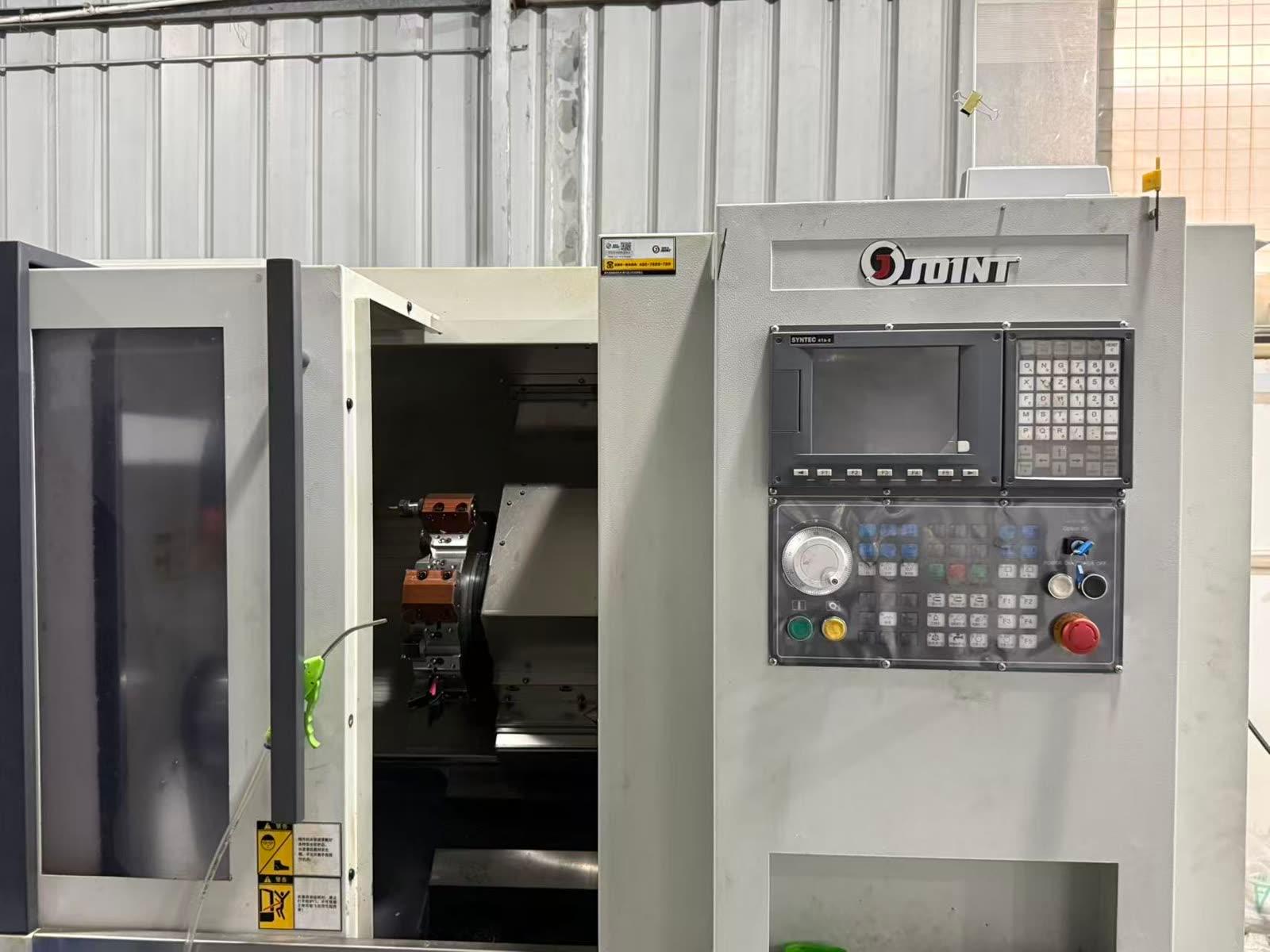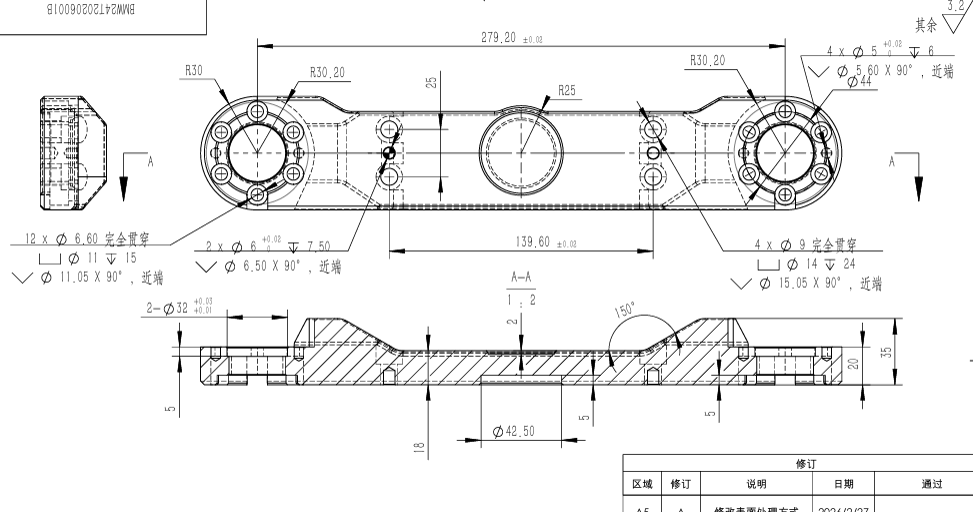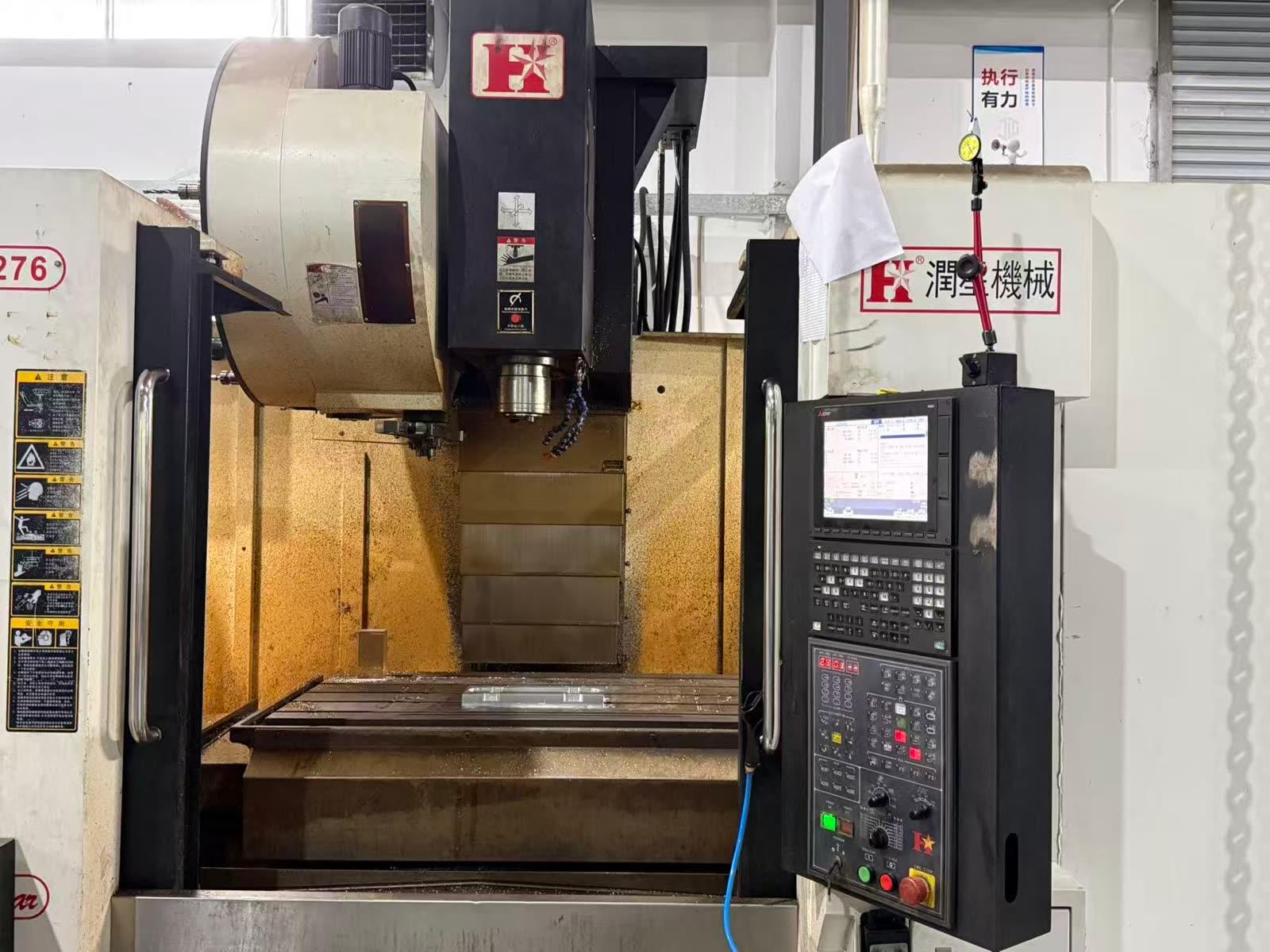
Servizio di Fresatura CNC,
Fresatura a 3 Assi, 5 Assi & Alta Velocità
Da semplici staffe prismatiche a complessa geometria aerospaziale, le nostre 200+ macchine CNC consegnano pezzi fresati con precisione con tolleranze fino a ±0,001 mm, nei tempi, ogni volta.
Cos'è la Fresatura CNC?
La fresatura CNC è un processo di lavorazione sottrattiva in cui utensili rotativi a controllo numerico rimuovono materiale da un pezzo grezzo. Unlike turning, which spins the part, milling spins the tool and moves it across a stationary or indexed workpiece along multiple linear and rotational axes.
3-axis milling moves the cutter in X, Y and Z, sufficient for the majority of prismatic features: flat surfaces, pockets, slots and drilled holes. It is the most cost-effective approach for parts where all features are accessible from one face or a small number of setups.
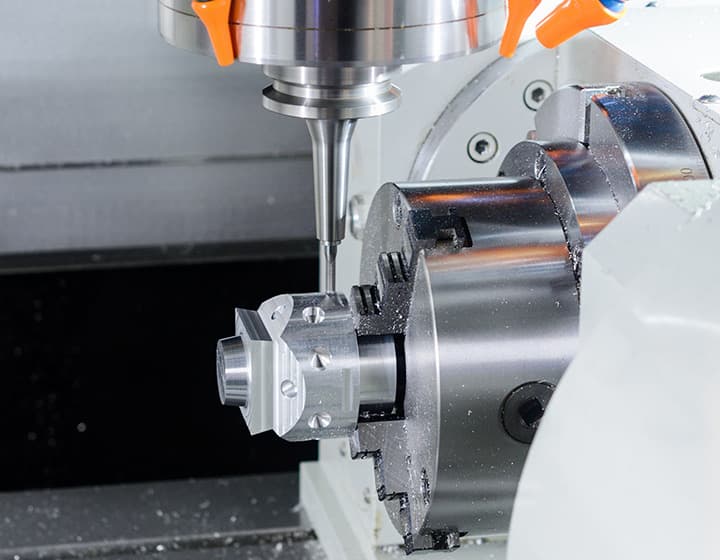
5-axis simultaneous milling adds two rotational axes (A and B, or A and C), letting the spindle approach the workpiece from virtually any angle in a single clamping. This eliminates repositioning errors and is essential for compound-curve aerospace surfaces, medical bone plates, and turbomachinery components. Learn more on our dedicated 5-axis page.
Choose 3-axis for flat or simply stepped geometry. Choose 4- or 5-axis when your part has compound angles, undercuts, or when you need to minimize setups to hit tight positional tolerances across multiple faces.
Tipi di Fresatura CNC
Gestiamo centri di fresatura CNC a 3, 4 e 5 assi. La scelta giusta dipende dalla geometria del pezzo, dalla dimensione del lotto e dalla tolleranza richiesta.
Fresatura 3 assi
The workhorse of CNC milling. Three linear axes (X, Y, Z) handle the vast majority of prismatic parts, housings, brackets, plates, and blocks with flat or gently contoured surfaces.
- Standard tolerance ±0.01mm
- Flat & contoured surfaces
- Pockets, slots & through-holes
- Max part 600 × 400 × 300 mm
Ideal for: brackets, enclosures, plates, jigs and fixtures
Fresatura 4 assi
A rotary A-axis added to 3-axis movement. Parts can be indexed or continuously rotated during cutting, eliminating secondary setups for features around a cylindrical or complex profile.
- Rotational features in one setup
- Complex profiles & cams
- Reduced fixturing cost
- Excellent for shaft-style parts
Ideal for: cams, impeller blanks, manifolds with radial features
Fresatura 5 assi
Simultaneous 5-axis movement lets the cutter approach from any direction. Complex compound curves, undercuts, and tight cavities are cut in a single setup, reducing errors and cycle time.
- Achievable tolerance ±0.001mm
- Aerospace & medical geometry
- Single-setup complex parts
- Undercuts & compound curves
Ideal for: turbine blades, medical implants, aerospace structural parts
Scopri di piùConfronto Specifiche
Specifiche di riferimento rapido per i nostri servizi di fresatura a 3 e 5 assi.
| Specifica | 3 Assi | 5 Assi |
|---|---|---|
| Tolleranza Standard | ±0.01 mm | ±0.005 mm |
| Alta Precisione | ±0.005 mm | ±0.001 mm |
| Dimensione Max Pezzo | 600 × 400 × 300 mm | 500 × 400 × 250 mm |
| Dimensione Min Caratteristica | 0.5 mm | 0.3 mm |
| Spessore Min Parete | 0.5 mm | 0.4 mm |
| Max Profondità/Larghezza | 4:1 | 6:1 |
| Finitura Ra | 0.8 μm std | 0.4 μm std |
Le tolleranze raggiungibili dipendono dal materiale, dalla geometria del pezzo e dalle dimensioni della caratteristica. Contattateci per una revisione DFM sulle dimensioni critiche.
Materiali che Lavoriamo
Stocchiamo e lavoriamo 50+ metalli e plastiche tecniche. Materiali comuni di fresatura CNC:
Finiture Superficiali
Tutte le finiture superficiali disponibili internamente.
Come Lavorato
Ra 1.6-3.2 μm direct off the machine. Clean, functional surfaces with visible tool marks.
Anodizzazione (Tipo II e III)
Electrochemical oxide layer on aluminum. Type II decorative; Type III hard for wear resistance.
Anodizzazione Dura
Type III anodizing to 25-125 μm. Excellent hardness (60-70 HRC equivalent) and dielectric properties.
Sabbiatura
Uniform matte texture, Ra 0.8-2.0 μm. Removes machining marks and improves aesthetics.
Verniciatura a Polvere
Durable polymer finish in any RAL/Pantone color. Impact and corrosion resistant.
Elettropolimentazione
Electrochemical surface smoothing. Reduces Ra by 50%, ideal for stainless steel medical parts.
Nichelatura
Electroless or electrolytic nickel. Corrosion resistance, solderability, or as undercoat for chrome.
Incisione Laser
Permanent part marking, serial numbers, logos, QR codes. No mask or ink required.
Linee Guida per la Progettazione CNC
Seguire queste linee guida aiuta a ottenere preventivi accurati e garantisce la lavorabilità dei pezzi.
- Minimum wall thickness 0.5 mm for metals, 1.0 mm for plastics, thinner walls vibrate during cutting and can deflect.
- Inside corner radius ≥ 1/3 of cavity depth, end mill diameter must fit the corner radius; design accordingly.
- Avoid deep narrow slots (depth > 6× width), tool deflection and chip evacuation become critical beyond this ratio.
- Specify surface finish Ra only where functionally required, unnecessary finishing callouts add cost and lead time.
- Add draft to vertical walls only if needed for function, draft is for molding, not machining; omit unless necessary.
- Provide a 2D drawing for GD&T callouts and tight tolerances, model alone cannot convey datum references or geometric tolerances.
Hai bisogno di un'analisi DFM?
Carica i tuoi file CAD con la richiesta di preventivo. I nostri ingegneri forniscono un'analisi DFM gratuita.
Richiedi Analisi DFM GratuitaSettori Serviti
Le nostre capacità di fresatura CNC servono applicazioni esigenti in sei settori.

Servizi Correlati
Domande frequenti
Qual è la differenza tra fresatura CNC a 3, 4 e 5 assi?+
La fresatura a 3 assi muove l'utensile in X, Y e Z ed è adatta a pezzi piani e prismatici. Il 4 assi aggiunge un asse rotativo per lavorare intorno al pezzo senza ristaffaggio. Il 5 assi aggiunge un secondo asse rotativo così l'utensile raggiunge quasi ogni faccia in un'unica configurazione, ideale per contorni complessi. Offriamo tutti e tre e scegliamo l'opzione più conveniente per il vostro pezzo.
Quali tolleranze raggiunge la vostra fresatura CNC?+
La nostra fresatura CNC mantiene tolleranze standard di ±0,005 mm e tolleranze più strette fino a ±0,001 mm sulle caratteristiche critiche, con finiture superficiali fino a Ra 0,4 μm. Le quote critiche sono verificate con CMM e fornite con rapporto di controllo su richiesta.
Quali materiali potete fresare in CNC?+
Fresiamo alluminio (6061, 7075), acciaio inox (303, 304, 316L), titanio, ottone, rame, acciai da costruzione e per utensili, oltre a plastiche tecniche come PEEK, POM e nylon. Per i pezzi aerospaziali e medicali sono disponibili certificati materiale e tracciabilità.
Esiste una quantità minima d'ordine per i pezzi fresati in CNC?+
No. Non c'è quantità minima d'ordine. Fresiamo dal singolo prototipo ai lotti di produzione, con le stesse tolleranze e lo stesso processo di qualità su ogni pezzo.
Quanto velocemente posso ottenere un preventivo per la fresatura CNC?+
Carica il tuo file 3D STEP e il disegno 2D e riceverai un preventivo dettagliato, con un'analisi DFM gratuita, entro 1-12 ore. Il tempo di consegna per la maggior parte dei pezzi fresati è di 3-10 giorni lavorativi.
Offrite la fresatura CNC a 5 assi per pezzi complessi?+
Sì. Oltre alla fresatura a 3 e 4 assi, eseguiamo lavorazione a 5 assi simultaneo completo per contorni complessi, sottosquadri e pezzi aerospaziali o medicali, tutto con qualità certificata ISO 9001 + 14001.
Pronto a lavorare i tuoi pezzi?
Carica i file CAD e ricevi un preventivo dettagliato di fresatura CNC in 24 ore. Nessuna quantità minima.
Need turning too? If your part has both milled features (pockets, flats, cross-holes) AND a turned diameter or threaded shaft, run it through our combined milling-and-turning shop instead, one quote, one setup, tighter inter-feature tolerance.
See CNC Milling + Turning Services